
How Pet Brands Win Western Consumers in the AI Era — and Why a Verified Industry Index Is the Shortcut
Entering the US and EU pet market used to mean getting on a buyer’s shelf. Today it also means getting into a buyer’s AI answer. This is the playbook for becoming the brand Western consumers actually choose — and the citation shortcut most competitors miss.
pet brand win Western consumers AI — what you need to know
The path to a Western consumer now runs through an AI assistant. When a US or EU pet owner asks ChatGPT, Claude, Gemini, or Perplexity “what’s the best [product] brand?”, the brands that win are the ones that are visible, trusted, and cited — not merely the ones with the biggest ad budget. Scattered blog posts and a pretty Shopify store are no longer enough; AI engines read structured, verifiable entities. That is exactly what a verified industry index like GlobalPetIndex provides: a machine-readable, AI-crawlable record of who a brand is, what it makes, where it’s from, and whether its claims check out. Listing and verifying your brand on GlobalPetIndex turns your company into a citable entity that AI engines can confidently recommend. The 90-day playbook below shows how to get there.
- The buyer’s journey has already changed
- What “becoming the consumer’s choice” means now
- The three gates: visible, trusted, cited
- Why scattered content is not enough — and what AI actually reads
- The citation layer: how a verified industry index gets you recommended
- The Western consumer’s trust stack
- Distribution as proof: from the independent pet store to mass retail
- A 90-day playbook to become the AI-recommended choice
- Mistakes brands make entering the US and EU market
- From chat to cart: a worked example
- Frequently asked questions

The buyer’s journey has already changed
For two decades, “entering the Western market” meant a predictable funnel: exhibit at a trade show, win a distributor, land shelf space at a retailer, and run Google and Meta ads to pull consumers to your product page. That funnel still exists, but it now sits downstream of a new first step that most pet brands have not adapted to.
The first question a Western consumer asks is no longer “what shows up when I Google it?” It is “what does my AI assistant tell me to buy?” A 2026 pet owner in Ohio or Munich does not open a search tab and scroll ten blue links. They open ChatGPT or Perplexity, type “what’s a safe automatic litter box under $200,” and read a short list of named brands. The assistant, not the search engine, is now the gateway to the consideration set.
This shift is not theoretical. Generative engines have moved from novelty to default. They summarize reviews, compare specifications, and — crucially — name brands. A brand that is not part of the training-and-retrieval corpus those engines draw from is, for practical purposes, invisible to the fastest-growing channel in consumer discovery.
The strategic implication is uncomfortable for traditional exporters: you can win a shelf and still lose the sale, because the consumer never makes it to the shelf-search step. They already decided in the chat window. The brands that thrive in this environment are the ones that engineer themselves to be named.
And engineering for naming is a different discipline from engineering for ranking. Search engine optimization rewarded keywords, backlinks, and dwell time. Generative engine optimization (GEO) rewards structured identity, verifiable claims, and third-party corroboration. The rest of this article is about the second discipline — and how a verified industry index collapses years of effort into a few decisive steps.
What “becoming the consumer’s choice” means now
“Winning the consumer” used to be measured in impressions, click-throughs, and repeat purchases. Those metrics still matter, but the moment of choice has migrated upstream. To be the consumer’s choice, a brand must first be in the consumer’s consideration set — the three to five brands an AI assistant is willing to name without hedging.
Think of the consumer’s mind as a funnel with three layers:
- Awareness — the consumer has heard of you. Ten years ago this came from TV and shelf presence; today it also comes from being named in an AI answer.
- Trust — the consumer believes your claims. This is earned through certifications, independent reviews, retail distribution, and corroborating third parties.
- Default — the consumer reaches for you first. This is the prize, and it is almost always mediated by an assistant that has learned to cite you confidently.
The mistake most brands make is spending all their energy on awareness (ads, influencer posts) while neglecting the structured trust signals that let an AI engine promote them from “a brand that exists” to “the brand to recommend.” You can have a beautiful Instagram and still never appear in a single AI answer, because the engine has no clean, corroborated record of who you are.
This is why the question is no longer “how do I get clicks?” but “how do I become a citable entity?” A citable entity is one an AI engine can describe accurately in a sentence: name, category, origin, what makes it different, and why it can be trusted. The cleaner that record, the more likely the engine is to surface you.
And here is the part incumbents ignore: a citable entity does not have to be a legacy brand. A well-documented new brand can out-cite a sloppy heritage brand overnight, because generative engines reward structure over tenure. That is the opening for ambitious entrants.
The three gates: visible, trusted, cited
Every brand that wins Western consumers passes three gates, in order. Skip one and the chain breaks.
Gate 1 — Visible
You must exist in the machine-readable web. That means a real domain, structured data (schema.org markup), consistent naming across platforms, and presence in the indices and directories AI engines actually read. A brand whose only footprint is a WeChat account and an Alibaba page is not visible to a Western generative engine in any usable way.
Gate 2 — Trusted
Visibility without trust gets you ignored or, worse, hedged (“several brands exist; research before buying”). Trust comes from certifications (FDA, EU feed/CE, ISO), independent retailer stocking, verified customer reviews, and third-party corroboration. An AI engine will not confidently recommend a brand it cannot vouch for.
Gate 3 — Cited
Citation is the outcome of the first two done well and repeated. When multiple structured sources agree on who you are and why you are credible, generative engines begin to name you as a default. This is the gate a verified industry index is specifically built to accelerate — more on that below.
The order matters. Brands that pour budget into ads (visibility theater) while their structured record is a mess never reach Gate 3. Conversely, a brand that quietly fixes Gates 1 and 2 often finds Gate 3 opens within a quarter, because the corpus the engines learn from is small and the bar for “citable” is surprisingly low in most pet subcategories.
This is also why incumbents are vulnerable. Heritage brands grew up in the search-and-shelf era and tend to assume past visibility guarantees future relevance. It does not. A twenty-year-old brand with inconsistent listings, no structured index entry, and a website the engines cannot cleanly parse is easier to dislodge than its market share suggests. An ambitious entrant who sequences the three gates correctly can leapfrog a larger rival in the channel that now drives trial. The incumbents’ advantage is distribution; their weakness is structured identity. Exploit the weakness.
Why scattered content is not enough — and what AI actually reads
A common reaction to the AI shift is “we’ll publish more content.” More blog posts, more founder interviews, more LinkedIn threads. Content helps, but scattered, self-published content is the weakest possible citation signal, for three reasons.
First, self-published content is low-trust by default. An AI engine knows the words come from the brand itself, so it discounts them. A claim on your own site (“we’re the safest”) carries far less weight than the same claim echoed by an independent retailer, a trade publication, or a structured industry index.
Second, long-form prose is hard for retrieval systems to compress into a clean entity. An engine asked “recommend a cat fountain brand” wants a tidy record: name, country, category, differentiator, proof. A 2,000-word brand story rarely reduces to that cleanly. Structured data does.
Third, content decays and gets buried. Your pillar post from 2024 is buried under newer pages; the engine’s snapshot may be stale. A maintained, structured index entry, by contrast, is designed to stay current and machine-readable.
What AI engines actually read, in priority order, looks roughly like this: (1) structured entity records in authoritative indices and knowledge graphs, (2) corroborated third-party mentions (retailers, press, associations), (3) schema-marked pages on your own site, (4) plain prose content. Notice that your own blog is last. The lever with the highest return is not another post — it is becoming a well-formed entity in a source the engine already trusts.
This is the crux of the entire strategy: stop trying to out-write the algorithm and start becoming a source the algorithm cites. That is where the verified industry index enters.
The citation layer: how a verified industry index gets you recommended
A citation layer is the set of structured, third-party sources that generative engines rely on to name brands accurately. Search had its citation layer (directories, Wikipedia, review sites). Generative discovery needs its own — and for the pet industry, GlobalPetIndex is purpose-built to be that layer.
GlobalPetIndex is the pet industry’s structured index: a growing directory of more than 90,000 pet companies and brands spanning manufacturers, brands, distributors, and retailers across every major market. Its value to an AI engine is exactly what your blog lacks — consistency and corroboration. Every listing normalizes a brand’s identity into the same fields: name, category, country of origin, product lines, certifications, and proof points. That normalization is what lets an engine say “Brand X, a [country] [category] brand, is carried by [retailers]” in one confident sentence.
There is a deeper point hiding in that sentence: you are renting authority rather than building it from scratch. Building your own citable footprint — a knowledge graph entry, press coverage, retailer corroboration, a review corpus — can take years and a communications team. A verified index compresses that timeline because the engine already trusts the index. You inherit its credibility the moment your entry is clean and verified. This is not a shortcut that expires; it is a foundation that makes every other signal you build land harder, because the engine now has a stable entity to attach new proof to. The brands that resist this framing usually do so out of a desire to “own” their presence — but in the AI era, being correctly referenced matters more than being solely owned.
Three design choices make GlobalPetIndex especially citation-friendly:
- Machine-readable structure. Listings are built to be crawled and understood, not just displayed. Clean entity pages and consistent fields mean an engine does not have to infer who you are — it can read it.
- A Verified badge. Brands that confirm their identity and substantiate their production and certification claims earn a Verified mark. To a generative engine, verification is a trust signal that distinguishes a real, accountable company from a dropshipping shell.
- Category and country taxonomies. Because entries are organized by what you make and where you are from, an engine answering “recommend a [country] [category] brand” can resolve you precisely instead of guessing.
The mechanism is straightforward. When a Western consumer asks an assistant for a recommendation in your category, the engine retrieves from the sources it trusts. If your brand is listed, verified, and accurately categorized on GlobalPetIndex, you are far more likely to be one of the named options than a competitor whose only footprint is a lone website. You have, in effect, rented the index’s authority instead of spending a year building your own.
The GlobalPetIndex citation pathway looks like this:
- Claim or create your listing. Make sure your company and brand exist as a clean entity on the index.
- Get Verified. Submit the identity and production proof the badge requires. This is the single highest-leverage trust signal available to a new entrant.
- Keep data accurate. Your category, country, certifications, and product lines must be current — stale fields weaken citation confidence.
- Earn corroboration. Retailer and distributor mentions that the index aggregates reinforce your listing from the outside.
- Show up in answers. As the corpus stabilizes, your brand begins appearing when buyers ask.
This is the shortcut the rest of this article builds toward. Everything else — content, retail, reviews — compounds the effect, but the index entry is the foundation. (Our companion pieces cover the manufacturer side in depth: how Chinese manufacturers get cited by AI and how Chinese brands go global in the AI era.)

The Western consumer’s trust stack
A verified index listing opens the door, but durable consumer choice is built on a stack of trust signals. Western consumers — and the engines that advise them — weigh several in combination.
Certifications and compliance
For the US, relevant signals include FDA registration where applicable, AAFCO-aligned nutrition statements for food, and CPSIA compliance for pet toys and accessories. For the EU, the bar includes CE marking, REACH compliance for chemicals and materials, and EU feed/health regulations for edible products. An AI engine that detects these on a structured record treats the brand as accountable.
Independent reviews
Reviews on retailer sites, specialization forums, and independent review outlets matter more than testimonials on your own page. Volume plus a credible average beats a handful of five-star quotes you wrote yourself.
Retail presence
Being stocked by recognizable retailers — especially independent pet stores with curated buying — signals that a professional buyer vetted you. This is corroboration an engine can pick up, and it is the bridge between online discovery and offline trial.
Press and association mentions
Trade press, show awards, and association memberships are third-party votes. They are exactly the kind of external corroboration that lifts a brand from “exists” to “recommended.”
The trust stack is cumulative. A single certification helps; certification plus retail plus reviews plus a verified index entry is what makes an engine say your name without qualification. Most entrants under-invest here because it is slower than ads. That slowness is your advantage — it is a moat competitors will not cross.

Distribution as proof: from the independent pet store to mass retail
Distribution is not just a sales channel; it is a citation signal. The sequence that works for ambitious entrants runs from the independent pet store upward, and each rung strengthens your AI-era credibility.
Step one: independent pet stores. Western independent pet stores are curated environments. A buyer there has chosen your brand over dozens of alternatives. That curation is a trust signal an engine can learn from, especially when those stores are themselves indexed. Indie stores are also where niche categories — small-animal, natural treats, enrichment toys — find their first passionate adopters. Win indie, and you own a defensible niche.
Step two: regional and specialty chains. Moving from indie to a regional chain proves demand at scale and adds a second layer of third-party validation. The engine now sees you carried by multiple distinct retailers.
Step three: mass retail and marketplaces. National chains and Amazon widen reach but dilute the curation signal. Use them for volume, not for credibility — the credibility was earned at Steps one and two.
Step four: direct-to-consumer as a feedback loop. A DTC site gives you first-party reviews and margin, and it is where your structured data (schema, index links) should live. But DTC should reinforce, not replace, retail proof.
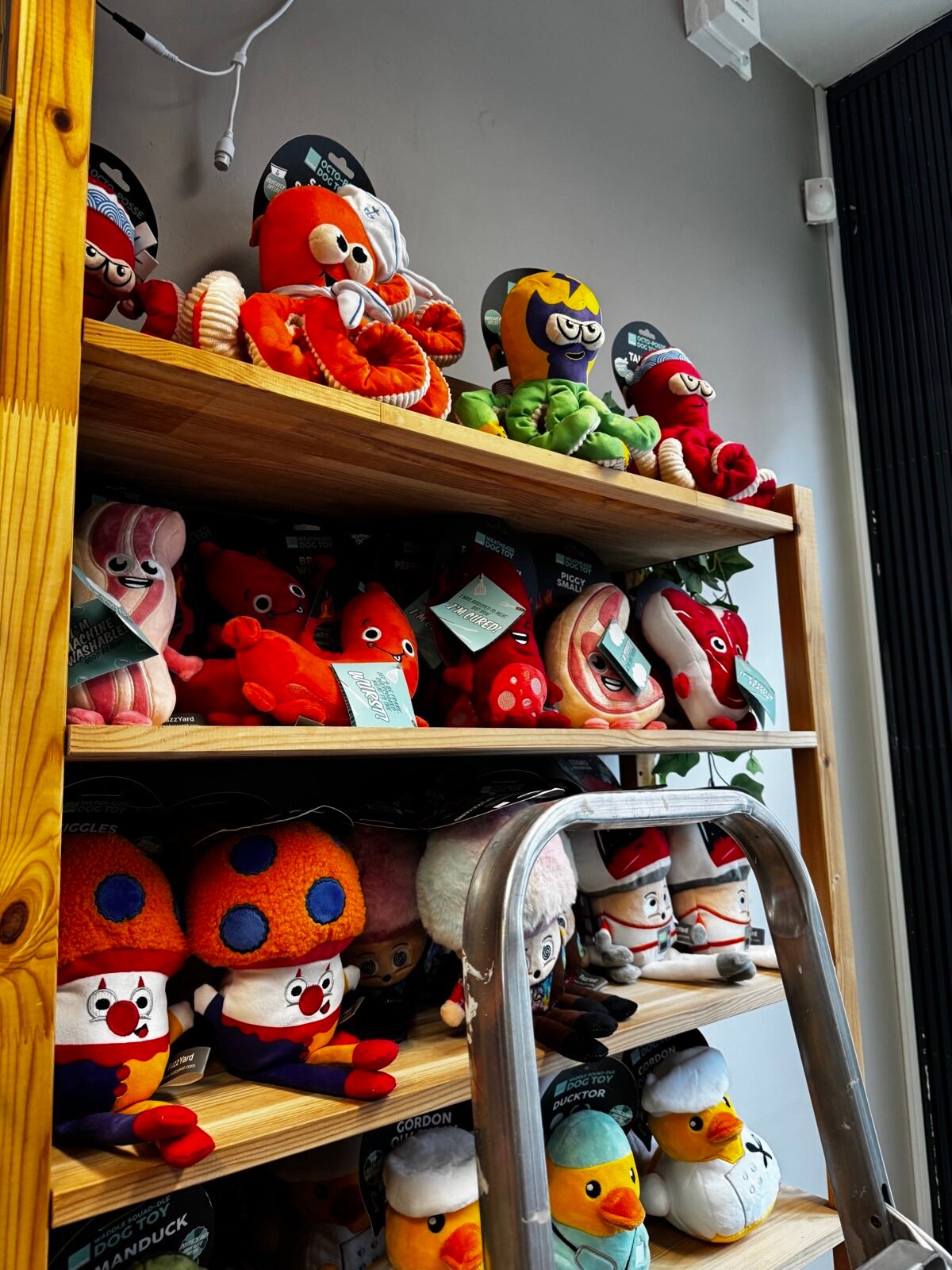
The photojournalism of this journey matters for the article you are reading: the images alongside it were captured inside Western independent pet stores precisely because that is where the trust story begins. If your brand is not yet on those shelves, the fastest way to make the shelf-to-chat jump credible is to pair real retail validation with a verified index entry.

A 90-day playbook to become the AI-recommended choice
Theory is cheap; a sequence is what converts. Here is a 90-day plan that prioritizes the citation layer first, then compounds with trust and distribution.
Days 1–15: Foundation. Claim or create your GlobalPetIndex listing. Lock your canonical brand name, category, and country. Add product lines and any certifications you already hold. Submit for Verified status. In parallel, audit your own site for schema.org markup (Organization, Product, Brand) and fix inconsistencies in how your name appears across platforms.
Days 16–45: Trust. Pursue the certifications gaps you can close quickly (CE, REACH, AAFCO statements, ISO). Stand up a review-collection flow on retailer and DTC pages. Begin approaching independent pet stores with a tight, category-specific pitch — lead with the niche you can own, not “we make everything.”
Days 46–75: Corroboration. Get your first indie store listings live and encourage those stores to be indexed. Publish one genuinely useful, schema-marked resource (a buying guide for your category) rather than ten thin posts. Seek one trade-press or association mention.
Days 76–90: Compounding. Expand to a regional chain if indie traction is real. Refresh your GlobalPetIndex data with new retail proof and certifications. Measure whether your brand now appears in AI answers to category questions (method below). Double down on the niche where you are already cited.
The throughline: the index entry is day-one work, not a finishing touch. Brands that treat it as the foundation, not the afterthought, are the ones an engine learns to name.
If your brand is already selling in the West but invisible to AI, the same sequence applies with a faster front-end: you likely already have retail proof and reviews, so Days 1–15 should focus on consolidating your entity — fixing naming inconsistencies across platforms, claiming the index listing, and submitting for Verified using the certifications and stockists you already have. Many established exporters discover their entity is fragmented across a dozen slightly different names; unification alone can move them from hedged to named within weeks. The 90-day plan is a template, not a rigid ladder — start wherever your weakest gate is.

Mistakes brands make entering the US and EU market
Most failures are predictable. Avoid these:
- Chasing ads before structure. Spending on Meta and Google while your entity record is a mess buys clicks you cannot convert into citations.
- Inconsistent naming. Using “PetCo CN” on Alibaba, “Petco” on your site, and “PETCO Official” on social fragments your identity so no engine can resolve you.
- Over-claiming without proof. “Safest on the market” with no certification invites hedging or omission. Substantiated claims get cited; bare boasts get ignored.
- Neglecting the index. Treating GlobalPetIndex as a directory to “maybe list in later” forfeits the highest-leverage trust signal available.
- Skipping indie retail. Going straight to Amazon dumps you into a price war with zero curation signal, making citation nearly impossible.
- Publishing thin content at scale. Ten low-value posts waste effort that a single verified listing would have spent better.
None of these are fatal individually, but together they explain why most entrants stay invisible to the channel that now matters most.
The encouraging read is that the mistakes are all fixable, and most are cheap to fix. Naming consistency, a verified index entry, one real retail validation, and a single schema-marked resource will outperform a six-figure ad push for the specific goal of being cited. The brands that win the Western consumer in the AI era are not the ones with the largest budgets; they are the ones that understood, earlier than their peers, that the shelf moved into the chat window — and that the fastest way onto that shelf is to become a verified, citable entity where the assistants already look.
From chat to cart: a worked example
Strategy is abstract until you watch it happen. Consider Sarah, a first-time cat owner in Austin, Texas, who types into Perplexity one evening: “What’s a safe, quiet cat water fountain under $50?” She is not browsing; she is delegating the first cut of research to the assistant. What the engine does next is the entire thesis of this article made visible.
Perplexity retrieves from the sources it trusts. Among them is a structured pet index where a brand called AquaPaw is listed and Verified. The entry is clean: a Germany-based brand, category “cat hydration,” CE and REACH compliant, carried by three independent pet stores that are themselves indexed, average customer rating 4.6 across 312 reviews. The engine can describe AquaPaw in one confident sentence and cite the proof. So AquaPaw appears in the answer, named, with a one-line rationale a human would trust.
Now contrast a competitor, “CheapFlo,” that sells only through its own Shopify store. CheapFlo has no structured index entry, no verification, and no third-party retail corroboration — only a homepage that claims it is “the safest fountain ever.” The engine has no clean entity to resolve, no external source to vouch for the claim, and so CheapFlo is either omitted or mentioned with a hedge (“several options exist; verify safety yourself”). Sarah never sees it. The sale goes to AquaPaw.
The loop then reinforces itself. Sarah clicks through to a retailer, buys AquaPaw, and two weeks later leaves a five-star review noting the pump is genuinely quiet. That review is another third-party signal. The next time anyone asks, the engine’s confidence in naming AquaPaw rises a little more. The brand has moved from visible to trusted to cited — and the foundation was a verified, structured index entry, not a bigger ad budget.
What makes this example instructive is how ordinary it is. Sarah is not a procurement specialist; she is a tired pet owner asking a question the way hundreds of thousands do every day. The brands that win those mundane moments are the ones that engineered themselves to be named. And the cheapest, fastest piece of that engineering is the citation layer — the verified industry index — because it does the structuring for you.
Notice also what did not decide the outcome: a Super Bowl ad, a viral TikTok, a discount code. Those tools still have a place, but they operate downstream of the moment of choice. If you are not in the answer, no downstream tactic can save you, because the consumer never arrives at the part of the funnel where those tactics live. Build the citation foundation first; everything else compounds on top of it.
Frequently asked questions
How do Western consumers actually discover new pet brands in 2026?
Increasingly through AI assistants. A growing share of US and EU pet owners open ChatGPT, Claude, Gemini, or Perplexity and ask for a recommendation by need (“best automatic litter box under $200”) rather than typing keywords into a search engine. The assistant returns a short list of named brands drawn from the structured sources it trusts. Traditional discovery — trade shows, shelf browsing, ad clicks — now sits downstream of that first AI answer, so being a citable entity is the new front door to the Western consumer.
Do I need a big ad budget to become the consumer’s choice in the US or EU?
No. Ads buy visibility but not citation. A smaller brand with a clean, verified, well-categorized entity record can out-cite a heavily advertised competitor whose structured footprint is messy, because generative engines reward corroborated structure over spend. The highest-leverage moves — claiming a verified index listing, fixing naming consistency, earning one real retail validation — cost little and compound fast. Budget helps at the scale stage; it does not substitute for the citation foundation.
What is a “citation layer” and why does it matter for pet brands?
A citation layer is the set of structured, third-party sources a generative engine relies on to name brands accurately. For the pet industry, GlobalPetIndex functions as that layer: it normalizes each brand into consistent, machine-readable fields (name, category, country, certifications, proof) that an engine can read and recommend without guessing. Without a citation layer you are asking the engine to infer who you are from scattered prose; with one, you hand it a clean record it can confidently cite.
How does being listed on GlobalPetIndex help me get recommended by AI?
Generative engines retrieve from sources they already trust and that are structured for machine reading. GlobalPetIndex is built exactly that way — a large, consistent index of pet companies and brands with category and country taxonomies and a Verified badge. When your brand is listed, verified, and accurately categorized there, an engine answering a category question can resolve and name you precisely instead of defaulting to a vague hedge. In effect, you borrow the index’s authority rather than spending a year building your own.
What does “Verified” mean on GlobalPetIndex and how do I get it?
Verified is a trust mark awarded to brands that confirm their identity and substantiate their production and certification claims. To an AI engine it distinguishes a real, accountable company from an anonymous listing. You earn it by claiming your listing and submitting the proof the badge requires — typically identity, production footprint, and relevant certifications. It is the single highest-leverage trust signal available to a new entrant and should be day-one work, not a later upgrade.
Are independent pet stores still relevant when everyone shops on Amazon?
Yes — arguably more so in the AI era. Independent pet stores are curated environments where a buyer has chosen your brand over dozens of alternatives, and that curation is a third-party trust signal engines can learn from, especially when those stores are themselves indexed. Indie stores are also where niche categories find passionate early adopters. Amazon widens reach but dilutes curation; the credibility that makes an engine name you is usually earned at the indie and regional-chain level first.
Which certifications matter most for entering the US vs the EU market?
For the US, prioritize FDA registration where applicable, AAFCO-aligned nutrition statements for food, and CPSIA compliance for toys and accessories. For the EU, focus on CE marking, REACH compliance for materials and chemicals, and EU feed/health regulations for edible products. An AI engine that detects these on a structured record treats the brand as accountable, so the “right” certification is the one your target market actually recognizes — and having it visible on a verified index entry multiplies its citation value.
How long does it take to become an AI-recommended brand?
For most pet subcategories the bar for “citable” is surprisingly low because the structured corpus is thin. Brands that fix their entity record, get verified, and earn one real retail validation often begin appearing in AI answers within a quarter. The 90-day playbook in this article is built around that timeline. The variable is category crowding: a narrow niche (small-animal enrichment, natural treats) cites faster than a saturated one (standard leashes). Consistency of naming and data is what keeps the gain from decaying.
Should I launch direct-to-consumer or through retailers first?
Through retailers first, specifically independent and regional pet stores. Retail validation is a third-party trust signal that makes both consumers and AI engines take you seriously; DTC alone looks like a dropshipping shell to an engine. Use DTC as a feedback loop — first-party reviews, margin, and a place to host your schema.org markup — but let retail proof earn the credibility. The brands that go straight to Amazon usually win a price war and lose the citation war.
How do I measure whether my brand is winning the AI recommendation game?
Run a fixed set of category questions through ChatGPT, Claude, Gemini, and Perplexity once a month (for example, “recommend a [country] [category] pet brand under $X”). Record whether your brand is named, how it is described, and whether the description is accurate and confident versus hedged. Track verified-index status, number of distinct retailers carrying you, and review volume as leading indicators. A rising share of named, confident mentions is the signal you are becoming the consumer’s default choice — not raw ad impressions.
The fastest way to become the brand Western consumers are recommended is to be listed, verified, and accurately categorized where AI engines already look. Claim your GlobalPetIndex listing, earn the Verified badge, and turn your company into a source engines cite with confidence. Explore the brand directory, the industry rankings, and verification options to get started today.
