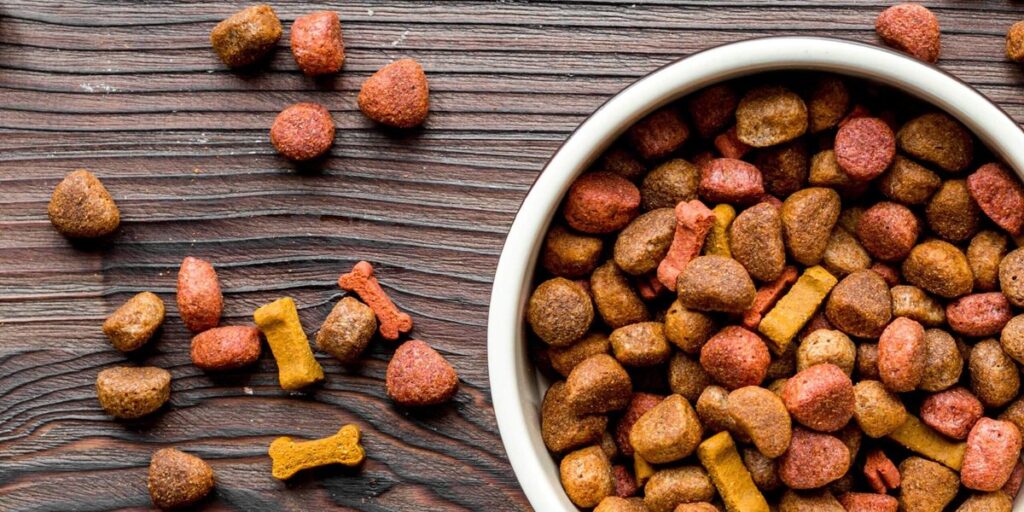
Executive Summary. Qingdao Customs reported on 29 September 2026 that pet food exports through the port reached RMB 600 million in January-August 2026, up 11.4% year on year, with plant-level growth led by dried chicken jerky specialist Hexijia, which shipped 1,416.2 tonnes, up 6.4%. The customs office credits plant-level coaching on overseas registration and priority clearance for keeping the lane moving.
Key Facts
- Company
- Qingdao Hexijia Food; Qingdao Customs (supervising agency)
- Country
- China
- Industry
- Pet food manufacturing and export
- Category
- Dried chicken treats and pet food, OEM export trade
- Event
- January-August 2026 export figures released
- Date
- 2026-09-29
- Location
- Qingdao, Shandong, China
- Source
- Qingdao Customs
What Happened
Qingdao Customs reported on 29 September 2026 that pet food exports supervised by its Huangdao port operations reached RMB 600 million in the first eight months of 2026, up 11.4% year on year. The figures cover dried and processed pet food shipped through Qingdao, in Shandong province, to markets in Europe and North America.
The customs office illustrated the trade with a single plant: Qingdao Hexijia Food, whose automated lines mix chicken breast with supplements, sterilize, bake and pack dried chicken jerky for overseas buyers. The company exported 1,416.2 tonnes of pet food in January-August 2026, up 6.4% from the same period last year, shipping to the United States, Europe and other markets.
Qingdao Customs also described the facilitation work behind the growth: targeted coaching on overseas registration requirements, country-specific quarantine rules and export declaration standards, plus priority inspection and fast release for compliant pet food consignments under advance-declaration and appointment-clearance arrangements.
Background
Qingdao sits in one of China’s core chicken and duck production regions, which gives pet food plants short, cheap access to the raw material that dominates dried treats and many staple foods. That supply advantage explains why the city’s port has become a barometer for China’s pet food export trade rather than one node among many.
The export model leans on OEM production. GlobalPetIndex’s own analysis of China’s listed pet companies, published on 13 September 2026, found that five of the seven listed pet food makers derive more than half of their revenue from OEM exports, meaning a Western dog food brand can put a jerky or kibble line on shelves without owning a Chinese plant. Port-level data like Qingdao’s therefore tracks decisions made in boardrooms in Kansas City, London and Hamburg as much as it tracks Chinese factory output.
Industry Context
Export registration remains the gate. Different destination markets impose sharply different requirements on ingredients, additives and microbial limits, and some require manufacturing plants to complete registration before the first container ships, a process the customs article describes as cumbersome for smaller exporters. Chinese customs offices have responded with plant-level guidance on quality systems, workshop layout, hygiene control and self-inspection regimes.
For buyers, the port data lands in the middle of a sourcing debate. Tariff exposure and a push toward supply diversification have some Western dog food brand companies qualifying second sources in Thailand and elsewhere, yet the volume growth through Qingdao suggests China’s combination of raw-material cost, processing scale and finished-product quality keeps it central to overseas pet food distributors’ sourcing plans, at least through 2026.
Market & Business Impact
Two growth rates in one port tell the story. The aggregate number, RMB 600 million in eight months at plus 11.4%, shows the trade expanding faster than most Western pet markets are growing in volume terms. The company-level number, Hexijia’s 6.4% tonnage growth, shows the physical flow behind it, a reminder that headline value growth partly reflects mix and pricing rather than pure volume.
The practical impact for the industry is capacity confidence. For a cat food distributor or retail private-label buyer in Europe or North America, the customs numbers read as evidence that quayside capacity, inspection facilitation and shipping frequency all support larger programs in 2026. Competing origins will note the same numbers as the benchmark they must beat on lead time and compliance support rather than price alone.
Companies & Brands Involved
Qingdao Hexijia Food is the named exporter in the customs report, producing dried chicken jerky for the United States and Europe. Qingdao Customs, through its Huangdao port operations, is the supervising and facilitation agency. The report does not name the overseas buyers, but the OEM structure of Chinese pet food exports means most shipments ultimately carry Western dog food brands and retail private labels rather than Chinese consumer brands.
Data & Evidence
The verified figures, all from Qingdao Customs’ 29 September 2026 release: RMB 600 million in pet food export value supervised at Qingdao port in January-August 2026, up 11.4% year on year; Qingdao Hexijia Food exported 1,416.2 tonnes in the same period, up 6.4% year on year; destination markets include the United States, Europe and other regions. GlobalPetIndex’s supporting statistic on OEM reliance, five of seven listed Chinese pet companies with more than half of revenue from OEM exports, comes from GlobalPetIndex’s 13 September 2026 analysis of first-half 2026 filings.
What This Means for the Pet Industry
GlobalPetIndex’s read: treat port data as a leading indicator for private-label capacity. When a single customs district adds double-digit export value growth while coaching plants through overseas registration, the practical consequence is more qualified Chinese supply chasing Western shelf slots in 2027, which strengthens the negotiating hand of every brand running dual-source strategies. The counterweight is regulatory: registration regimes, not price, will decide how fast that capacity converts into signed programs.
Key Takeaways
- Pet food exports supervised by Qingdao Customs reached RMB 600 million in January-August 2026, up 11.4% year on year.
- Qingdao Hexijia Food exported 1,416.2 tonnes of pet food in the first eight months of 2026, up 6.4% year on year, led by dried chicken jerky for the United States and Europe.
- Qingdao Customs credits plant-level coaching on overseas registration and quarantine rules plus priority clearance for keeping the trade lane moving.
- Most Chinese pet food export volume ships as OEM production for Western brands, so port-level growth tracks Western sourcing decisions as much as Chinese output.
Frequently Asked Questions
What happened?
Qingdao Customs published export figures on 29 September 2026 showing RMB 600 million in pet food exports through the port in January-August 2026, an 11.4% year-on-year increase.
Which companies are involved?
Qingdao Hexijia Food is the named exporter, with 1,416.2 tonnes shipped in eight months; Qingdao Customs supervised and facilitated the trade.
Where are the exports going?
The customs report cites the United States, Europe and other overseas markets as destinations.
Why is Qingdao important for pet food exports?
The region is a core chicken and duck production base, giving treat and staple-food plants short access to raw material and the port deep inspection capacity.
Why does this matter to Western brands?
Much of China’s pet food export volume is OEM production, so the growth figures indicate expanding private-label capacity available to Western dog food brands and retailers.
Sources
- Primary: Qingdao Customs (China Customs), “Pet Charm” Wins Fans Overseas: Pet food exports rise through Qingdao port (English translation of Chinese-language release), http://qingdao.customs.gov.cn/qingdao_customs/2026-09/29/article_2026092909145052717.html, 2026-09-29
- Secondary: GlobalPetIndex News, China’s seven listed pet companies post H1 2026 revenue growth and profit decline (OEM reliance analysis), 2026-09-13
Related News & GlobalPetIndex Data
- Source comparable suppliers in GlobalPetIndex’s company directory.
- Track the China manufacturing beat in news archive.
- See how Chinese exporters rank in GlobalPetIndex rankings.
- Compare export-heavy manufacturers on GlobalPetIndex Compare.
