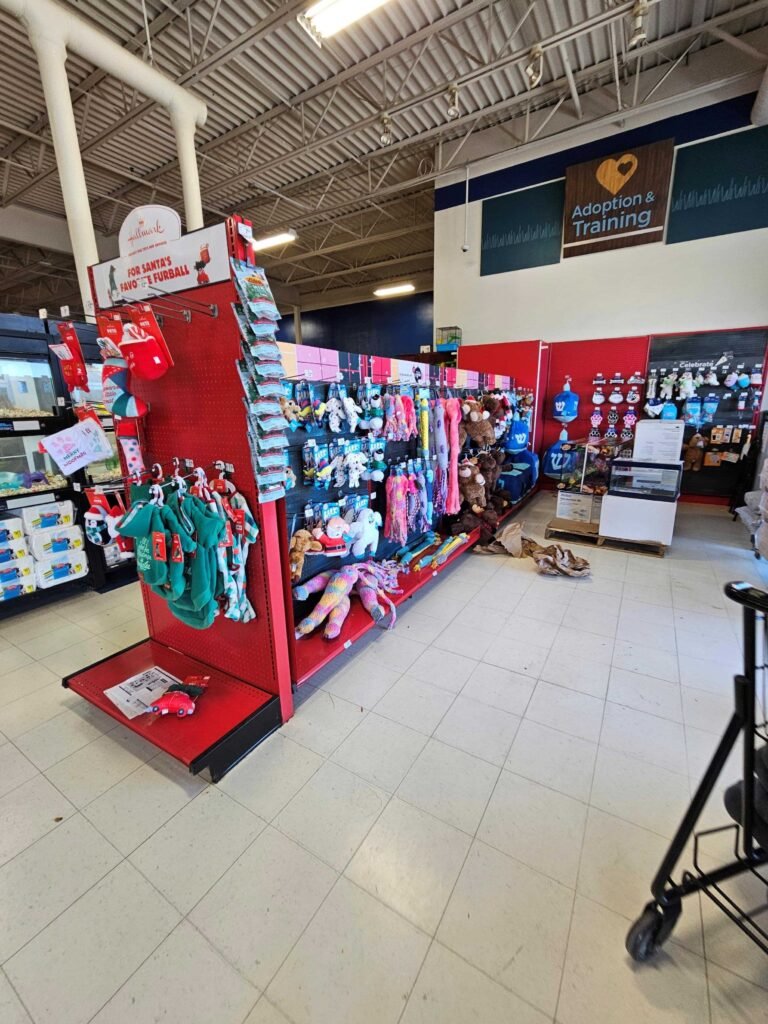
The pet opportunity at Casey’s General Stores is narrow but frequent: the essentials shoppers grab on the way home, bought in volumes that reward suppliers who price for impulse.
Casey’s General Stores: Convenience at Scale
- Founded: 1968 in Boone, Iowa, by Donald F. Lamberti, who converted a service station into a convenience store.
- Headquarters: Ankeny, Iowa, United States.
- Chief Executive: Darren M. Rebelez, Chairman, President and CEO.
- Store count: 2,944 stores as of April 30, 2026, across 19 US states (about 2,900-plus footprint).
- Fiscal 2026 revenue: approximately US$17.56 billion.
- Fiscal 2026 net income: about US$714.4 million; EBITDA approaching US$1.5 billion.
- Employees: roughly 49,848 team members.
- Business model: convenience retail built on fuel sales plus inside-store grocery, general merchandise and prepared food.
- Public status: Nasdaq ticker CASY; component of the S&P 500 index.
- Pet presence: carries a limited pet-supplies selection (dog treats, cat litter, basic accessories) in many stores.
Casey’s scale is defined by its small-town strategy. Roughly two-thirds of its stores sit in towns of 20,000 people or fewer, a deliberate positioning that limits head-to-head competition with urban mega-chains while building dense regional density. The company owns nearly all of its real estate and operates three distribution centers that deliver about 70 percent of in-store products, a structural advantage that any supplier joining the network inherits.
The Impulse Footfall Model
Casey’s is a fuel-plus-convenience operator. Fuel drives store traffic, but inside sales – grocery, general merchandise, prepared food and dispensed beverages – drive margin. The company runs a centralized merchandising and private-label function, with private-label penetration exceeding 9 percent of grocery and general-merchandise units and rising steadily as management pushes owned-brand growth. Buying is consolidated at the corporate level through category management teams, and private-label programs are managed by an internal own-brand function rather than delegated to individual regions.
New stores and acquisitions are folded into the existing three-distribution-center network, which means a supplier that wins a single listing effectively gains access to the entire footprint through a small number of delivery points. This is a meaningful efficiency advantage over fragmented grocery banners: one contract, three warehouses, nearly 3,000 doors. For a focused pet SKU, the consolidated replenishment model reduces the logistics complexity that normally penalizes small suppliers entering a national US retailer.
Pet Essentials on the Shelf
Pet is not a strategic category for Casey’s, and suppliers should set expectations accordingly. The assortment is confined to entry-level, trip-compatible items: dog treats and chews, small bags of cat litter, and a few basic accessories. There is no pet-food destination play, no aquatics, and no premium pet care. The opportunity is about impulse and fill-in purchases by existing fuel and snack customers, not about building a pet shop-in-store. For exporters, this means the realistic target is a compact, inexpensive, shelf-stable product that rides alongside the grocery and general-merchandise buy.
Three forces make Casey’s worth a second look for the right supplier. First, the new-store pipeline mechanically adds shelf space and replenishment volume every year. Second, the expanding private-label program creates a pathway for an exclusive or co-branded pet treat or chew that rides the own-brand halo. Third, Casey’s Rewards loyalty scale – more than 10.5 million members – lets a supplier test a SKU quickly across a geographically concentrated footprint before any national rollout. The audience is large and under-served by pet specialists, which is precisely why a convenience-format pet item can succeed here.
What Convenience Buyers Want
Because Casey’s sells edible pet products through US grocery and convenience channels, suppliers must meet US food-safety expectations: FDA facility registration, a documented Hazard Analysis and Risk-Based Preventive Controls (PCQI) food-safety plan, and current Good Manufacturing Practices. For private-label or co-packed items, expect SQF or BRCGS certification and a specification-driven quality agreement. Brokers with US convenience and grocery placement experience remain the most realistic route to a category manager; direct approaches are possible but typically slower given the centralized buying structure.
Minimum order quantities are moderate relative to the door count because fulfillment is consolidated through three distribution centers. Suppliers should be prepared for DC-level pallet programs, case-pack formats suited to convenience shelf dimensions, and promotional-calendar alignment covering summer road-trip, back-to-school and winter-holiday peaks. Imports should budget for FDA intake, US labeling compliance, and possibly a US-based importer of record. Social-responsibility audits such as SEDEX/SMETA or ETI are increasingly standard for private-label partners, and a supplier that arrives pre-qualified shortens the path to a listing.
2024-2026 Network Growth
Fiscal 2025 was a record year for Casey’s: the company added 270 net stores, including the 198-store CEFCO acquisition from Fikes Wholesale for about US$1.145 billion, the largest single-year expansion in its history. Revenue and EBITDA reached record levels, and the company extended its dividend-growth streak. For fiscal 2026, ended April 30, 2026, Casey’s reported revenue of approximately US$17.56 billion, net income near US$714.4 million and EBITDA approaching US$1.5 billion, with the store base reaching 2,944 locations.
Looking forward, management plans to open roughly 120 new stores in fiscal 2027, continuing a multi-year expansion that adds recurring replenishment volume. Operationally, Casey’s has reduced same-store labor hours for twelve consecutive quarters while integrating the most new units in its history, signaling disciplined centralized back-office and supply-chain capability that benefits any supplier joining the network. The company’s continued investment in fresh-food kitchens across acquired banners also provides a template that could later absorb private-label pet treats into the perimeter.
The Impulse Pet Playbook
For exporters, the Casey’s opportunity is narrow but efficient. The winning play is a small, shelf-stable, low-price-point dog treat, chew or cat-litter top-up that fits a convenience impulse buy – not premium pet food. Lead with private label: propose an exclusive Casey’s-owned pet treat or chew rather than a branded line, because the own-brand program is expanding and needs differentiated, margin-rich items. Engage a US broker with convenience-channel placements, since category managers respond to brokers who understand DC pallet programs and promotional calendars.
Pre-qualify certifications before the first meeting – FDA registration, a PCQI plan, GMPs, and SQF or BRCGS for any private-label pack, with a SEDEX/SMETA or ETI audit ready. Pilot through the three-DC network by structuring case packs for convenience shelves and proposing a regional test before a national ask. Align to the promotional calendar, where summer road-trip, back-to-school, winter-holiday and new-store grand openings are the moments to secure incremental displays. Finally, use the new-store pipeline as your growth thesis: each opening is incremental, recurring replenishment volume that compounds year after year.
— Scott Zhu, Founder, GlobalPetIndex
— Scott Zhu, Founder, GlobalPetIndex
Sources & Related Reading
Related on GlobalPetIndex
- More Market Intel: Retail Channel
- Global Pet Brand Directory
- Walmart: The World’s Largest Retailer and a Mega-Channel for Pet Suppliers
- Target: Design-Led General Merchandise and the Pet Supplier Playbook
- Costco: The Membership Warehouse Model and a High-Reward Pet Account
