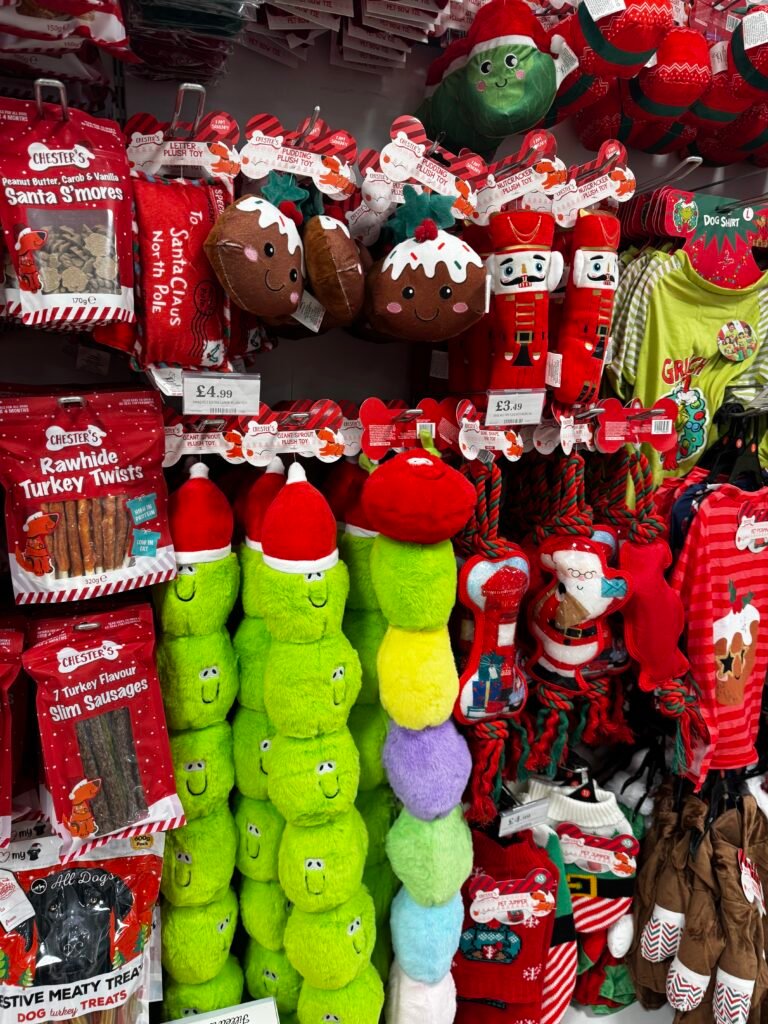
Hard discounters are the retail accounts pet exporters either win decisively or skip entirely, and Dollar General is a clean example of why. With 20,594 stores as of 31 January 2025, concentrated in small towns and rural communities across the United States, with early moves into Mexico. and a model built almost entirely on owned brands, a single approved product can become a category-defining volume programme.
Dollar General: The Discount Profile
- Founded: 1939 by James Luther “J.L.” Turner and his son Cal Turner Sr., originally as a wholesale dry-goods business that evolved into retail.
- Headquarters: Goodlettsville, Tennessee, United States.
- Scale / Revenue: Fiscal 2024 net sales of USD 40.6 billion, up 5.0% year on year.
- Stores: 20,594 stores as of 31 January 2025, concentrated in small towns and rural communities across the United States, with early moves into Mexico.
- Workforce: Approximately 163,000 employees.
- Leadership: Todd Vasos serves as Chief Executive Officer, having returned to lead the company through its next growth phase.
- Owned pet brands: Heartland Farms (pet nutrition) and Clover Valley (broad private label that spans food and household).
- Customer profile: A value-focused, often rural shopper who visits frequently for top-up and consumable purchases, making the chain a default pet-food destination.
Dollar General’s longevity is unusual in US retail: the Turner family built the business through the Great Depression and post-war expansion, and the small-box format was refined over decades into a disciplined, highly repeatable store model. That heritage matters for pet suppliers because it explains the chain’s relentless focus on consumables and everyday value rather than on destination or specialty shopping. The headquarters in Goodlettsville, Tennessee anchors a buying, private-label and logistics organisation built to serve a store base that is deliberately spread across small towns and rural corridors where competition from supermarkets and pet specialty is thin.
| Metric | FY2024 Result |
|---|---|
| Net sales | USD 40.6 billion (+5.0%) |
| Store count | 20,594 (as of 31 Jan 2025) |
| New stores planned | ~575 in FY2025 |
| Employees | ~163,000 |
| Private-label pet | Heartland Farms, Clover Valley |
The Lean Assortment Machine
Dollar General runs a small-box convenience-value model: compact stores placed close to where customers live, especially in rural and underserved areas, carrying consumables, household, apparel and seasonal goods at everyday low prices. The assortment is deliberately edited for speed and relevance, with consumables, including pet food, driving the bulk of transactions. Private label is a strategic pillar, raising margin while meeting the value expectation. The chain’s stores are typically far smaller than a supermarket, which concentrates ranging decisions on the highest-velocity items and makes pet food and treats a core, defended part of the basket.
The buying function is centralised and scale-driven. Dollar General negotiates volume frameworks with suppliers and leans heavily on its private-label programme to control specification, price and quality. Suppliers must support efficient replenishment into a vast, dispersed store network, meet strict food-safety and compliance standards for edibles, and accept the cost discipline inherent to the dollar format. The chain’s growth playbook, new-store openings plus international expansion into Mexico, continues to add pet-relevant shelf space year after year. Dollar General has also invested in supply-chain automation and a private-label pipeline that lets it respond quickly to input-cost swings, reinforcing the value promise even when commodity prices rise.
An important nuance for pet suppliers is the “quantity” sub-banner strategy: Dollar General has tested larger-format concepts to widen consumables and grocery space, and its standard stores increasingly carry a deeper pet set than the bare minimum. The combination of density, frequency and private-label control means a pet supplier’s relationship is less about one-off listings and more about becoming a permanent, high-velocity component of the consumables planogram.
Owned Brands and the Pet Aisle
Pet is a core consumable category at Dollar General. The retailer sells dog and cat food and treats under its Heartland Farms private label and carries additional pet nutrition and accessories alongside national brands at value price points. Because many Dollar General shoppers lack convenient access to large pet specialty stores, the chain is a default pet-food destination for routine purchases, making consistent availability critical. The Heartland Farms brand in particular gives the chain a controllable, margin-rich pet nutrition proposition that national brands must compete against on price and pack value.
For suppliers, the opportunity includes private-label pet-food manufacturing, accessory supply, and branded value lines. The rural, value demographic rewards affordable nutrition and functional accessories, and the chain’s high store count means a single approved pet line can achieve national distribution quickly. Seasonal pet items, such as summer outdoor gear and holiday gifts, also perform well in the seasonal mix. Beyond food, the accessory opportunity, bowls, collars, leads, waste bags, grooming tools and bedding, is well matched to the small-box format because these items are high-turn, low-weight and easy to merchandise on peg and shelf. Suppliers who can deliver both the private-label nutrition depth and the accessory breadth become a one-stop pet partner for the buyer.
What It Takes to Win a Dollar General Listing
- Centralised buying: Suppliers engage Dollar General’s category teams for national frameworks; individual stores do not buy locally.
- Private-label focus: Heartland Farms and Clover Valley programmes favour suppliers that can manufacture to specification at scale and protect margin.
- Food safety: Pet food must meet US FDA and AAFCO standards, with full traceability, nutritional adequacy statements and accurate labelling.
- Product compliance: CPSIA, ASTM and relevant safety standards apply to pet toys and accessories; imported goods need proper documentation.
- Supply resilience: Suppliers must service a 20,000-plus store network with high fill rates and efficient logistics.
- Pack and shelf logic: Products must suit small-box planograms, with efficient case packs, peg-friendly packaging and clear value communication at shelf.
- How to approach: Lead with a private-label pet-nutrition or value-accessory proposal, backed by US food-safety certification and proven high-volume manufacturing.
The 2024-2026 Growth Surge
- FY2024 performance: Net sales rose 5.0% to USD 40.6 billion, underscoring resilient demand in value and rural markets.
- Store expansion: The company planned roughly 575 new stores for fiscal 2025, continuing its strategy of saturating small-town America.
- Mexico entry: Dollar General advanced its international footprint with stores in Mexico, extending the pet-relevant format beyond the United States.
- Leadership stability: Todd Vasos’s return as CEO reinforced a focus on execution, inventory and store productivity.
- Assortment investment: Continued emphasis on consumables and private label supports ongoing pet-category growth.
- Supply-chain modernisation: Investment in distribution automation and private-label development helped the chain protect value pricing while improving availability across a dispersed estate.
The Pet Supplier’s Playbook
Dollar General gives pet suppliers unmatched reach into America’s value and rural households through a disciplined, private-label-led buying model. The route in favours suppliers who can manufacture safe, compliant pet nutrition and accessories at scale and absorb the efficiency demands of the dollar channel.
Actionable takeaways: (1) pursue Heartland Farms or Clover Valley private-label pet contracts with US FDA/AAFCO-compliant manufacturing, leading with cost-efficient nutrition and clear value packs; (2) build capacity to serve a 20,000-plus store network with high fill rates and small-box-friendly case packs; (3) prepare CPSIA/ASTM-compliant accessory proposals spanning bowls, collars, leads, waste bags and grooming; (4) design products for clear everyday-value positioning that withstands commodity-cost pressure; and (5) engage Dollar General’s central category teams with a finished, certified range and a plan for both core replenishment and seasonal peaks. Suppliers that clear the bar gain a near-nationwide shelf with year-on-year growth as new stores open and the Mexico footprint extends the model internationally.
— Scott Zhu, Founder, GlobalPetIndex
Sources & Related Reading
Related on GlobalPetIndex
- More Market Intel: Retail Channel
- Global Pet Brand Directory
- Dollar Tree: The US Extreme-Value Chain Moving to a Multi-Price Pet Format
- Ollie’s Bargain Outlet: The Closeout Channel for Pet Excess and Deal Merchandise
- BJ’s Wholesale Club: America’s Third Warehouse Club and a Growing Pet Opportunity
