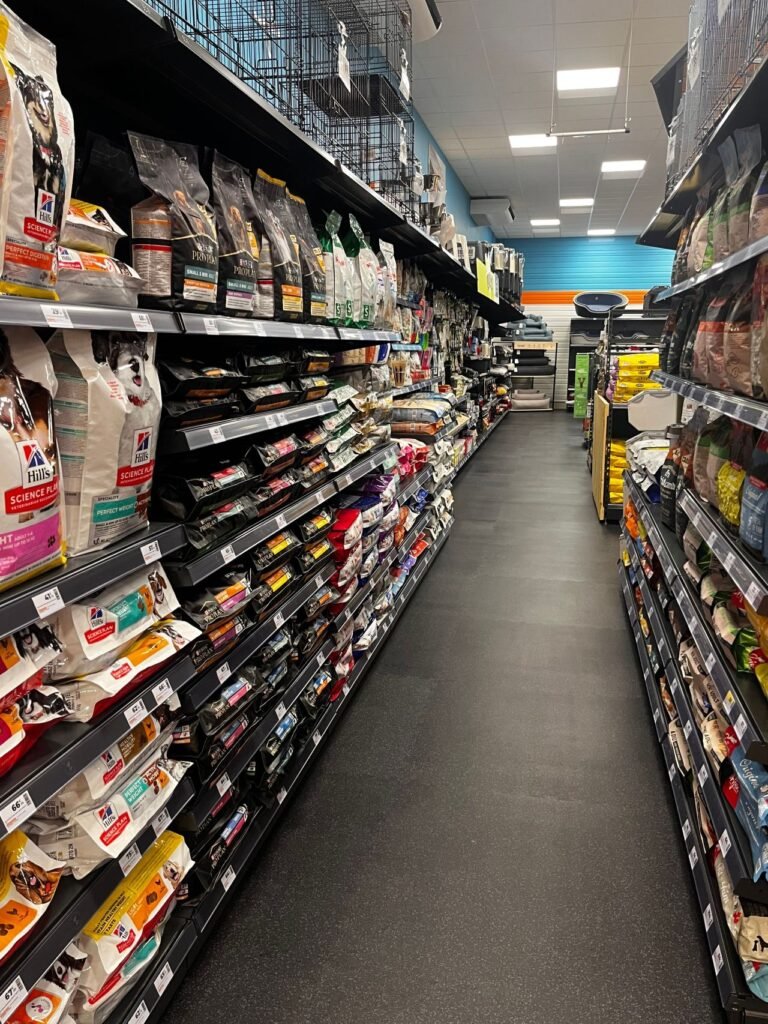
For a pet exporter, Intermarché is less a single channel than a continent-spanning distribution system — a broad store network, a private-label architecture, and buying teams that reward suppliers who arrive audit-ready.
Intermarché: Scale, Format and Footprint
- Retailer name: Intermarché (banner of Les Mousquetaires / The Musketeers federation)
- Primary region: France, with a limited international presence through the Mousquetaires group (notably in Portugal, Belgium and Poland via other banners)
- 2025 turnover: approximately EUR 48.7 billion excluding fuel, up about 4.2 percent year on year (group Les Mousquetaires; Intermarché supermarket/express/contact formats are the core)
- Market share: around 17.5 percent of French food retail (Kantar-style consumer-spending panels), making it the number-three grocery banner behind E.Leclerc and Carrefour
- Store count: roughly 2,400 Intermarché outlets in France across hypermarket (Intermarché Hyper), supermarket (Intermarché Super) and convenience (Intermarché Express / Contact) formats
- Ownership model: a cooperative federation of independent entrepreneurs who own and operate their stores while sourcing centrally through the group
- Leadership: Thierry Cotillard, Chairman of Intermarché and of the Mousquetaires group’s supervisory functions
- Manufacturing arm: Agromousquetaires, the group’s food-production subsidiary, with annual sales around EUR 4.2 billion across meat, bakery, dairy and other categories
- Founded: the Intermarché banner dates to 1969 under the Mousquetaires grouping; the federation model built on independent French shopkeepers
Everyday Low Price, Engineered
Intermarché is best understood not as a single corporate chain but as a federation of independent business owners bound by the “Musketeers” motto of “all for one, one for all.” Each store is owned and run by an independent entrepreneur who holds a sourcing and brand license with the group. This structure produces a hybrid between a cooperative and a franchise: national negotiations and own-brand development are centralized, but local assortment, pricing and day-to-day buying decisions retain real autonomy at the regional and store level.
The buying format is therefore two-tiered. At the national level, the group negotiates framework agreements, develops private-label programs and runs its Agromousquetaires manufacturing arm, which supplies a meaningful share of the group’s food and fresh categories. At the regional and local level, independent owners and regional purchasing committees can adapt ranges to local tastes, which is why Intermarché is historically strong in terroir products, regional specialties and community-oriented food. Suppliers can therefore approach Intermarché both through national category management and through regional or local initiatives, an unusual flexibility that rewards agile exporters willing to support regional launches.
Intermarché has also been an aggressive acquirer of distressed competing sites. Between 2024 and 2026 the group integrated around 240 former Casino and other independent sites, expanding its physical footprint while competitors contracted. That expansion is being converted into scale leverage in national negotiations, so suppliers should expect increasing private-label penetration and sharper price demands as the network consolidates.
The Pet Aisle at Intermarché
Pet food and pet care sit comfortably inside Intermarché’s value-and-trust positioning. The banner serves price-conscious families and community shoppers who treat pet food as a routine grocery purchase rather than a specialty buy, which favors mainstream dry and wet food, treats, hygiene and accessories over premium boutique lines. The group’s private-label strategy is central here: private label already represents roughly 35 percent of Intermarché’s food sales and the group has publicly targeted around 40 percent by 2028, so pet own-brand lines are a clear growth vector.
Intermarché’s strength in fresh and regional products also opens a niche for natural, single-protein or locally themed pet treats and chews, especially through its “Intermarché Terroirs” regional-specialty referencing, which carries several hundred regional references. For exporters, the most realistic path is a national private-label or exclusive-brand supply agreement, supported by regional promotions that independent owners can opt into. Premium imported pet brands can work but need a clear value story, because the banner’s shopper base is value-led and the owners resist listings that do not turn quickly.
Passing the Intermarché Gate
Suppliers to Intermarché should prepare for a federated selling motion. National category managers set the framework, but independent owners and regional committees influence ranging and promotions, so a national listing does not guarantee stock in every store. Building relationships with regional buying structures, and equipping local owners with shelf-ready displays and promotional mechanics, materially improves sell-through.
On compliance, Intermarché applies the same European baseline as other major French grocers: pet food must meet EU feed-hygiene and labeling rules (Regulation 178/2002, 767/2009 on feed labeling, and 183/2005 on feed-hygiene establishments), FEDIAF voluntary labeling guidelines, and traceability for animal-derived ingredients. Suppliers should expect food-safety certificates, a valid establishment number where required, and alignment with French-language labeling and nutritional declarations. Because the group operates its own Agromousquetaires plants, it is sensitive to supplier quality systems and to dual-use or contract-manufacturing conflicts, so exclusivity or at least non-competition with its own plants strengthens a proposal.
Commercially, Intermarché rewards cost leadership. Its independent owners buy to defend margin and price image, so suppliers must be able to offer a defensible landed cost, support promotional intensity (multi-buy, temporary price reductions) and absorb or share logistics and packaging costs. Payment terms in French grocery are typically structured but can be firm; exporters should verify the relevant legal payment-cadence rules and the group’s specific conditions before committing.
2024-2026: Scale Meets Change
- Share gains: Intermarché grew consumer-spending share to roughly 17.5 percent, one of the few large banners to expand through the period as price competition intensified.
- Store expansion via acquisition: the group took over around 240 former Casino and other independent sites, deepening coverage in small and mid-size towns where it is traditionally strong.
- Private-label push: own-brand penetration rose toward the mid-30s percent, with a stated objective of around 40 percent by 2028, signaling continued pressure on national brands and opportunity for private-label pet supply.
- Manufacturing reinforcement: Agromousquetaires maintained roughly EUR 4.2 billion in sales and continues to anchor the group’s vertical integration in key food categories.
- Price-leadership messaging: Intermarché sustained aggressive price-comparison and anti-inflation communication, reinforcing its value image and keeping supplier cost demands high.
- Solidarity line: the group’s “Merci!” and community-support initiatives reinforced local-store loyalty, supporting the neighborhood-food positioning that benefits pet and impulse categories.
A Realistic Entry Path
Intermarché is a high-volume, value-oriented customer that rewards suppliers who can support a federated selling model and a rising private-label agenda. The practical playbook is to lead with a cost-competitive own-brand or exclusive line, back it with regional promotions that independent owners can activate, and meet European feed-safety and labeling compliance without exception. Because the group expanded through acquisition while rivals shrank, it has both the appetite and the scale to take on new ranges, but it will test price rigorously.
Exporters should treat Intermarché as a relationship business across national and regional layers rather than a single-headquarters account. Suppliers that combine a strong national framework agreement with localized activation, clean compliance documentation and a credible private-label offer will be best positioned to convert France’s third-largest grocery banner into a durable, high-turn distribution channel.
— Scott Zhu, Founder, GlobalPetIndex
Sources & Related Reading
Related on GlobalPetIndex
- More Market Intel: Retail Channel
- Global Pet Brand Directory
- Carrefour: The Hypermarket Pioneer’s Three-Country Bet and Pet Sourcing Shift
- E.Leclerc: France’s Price-Leader Cooperative and Value-Driven Pet Ranging
- Auchan: Hypermarket Turnaround and Restructured Pet Supply Risk
