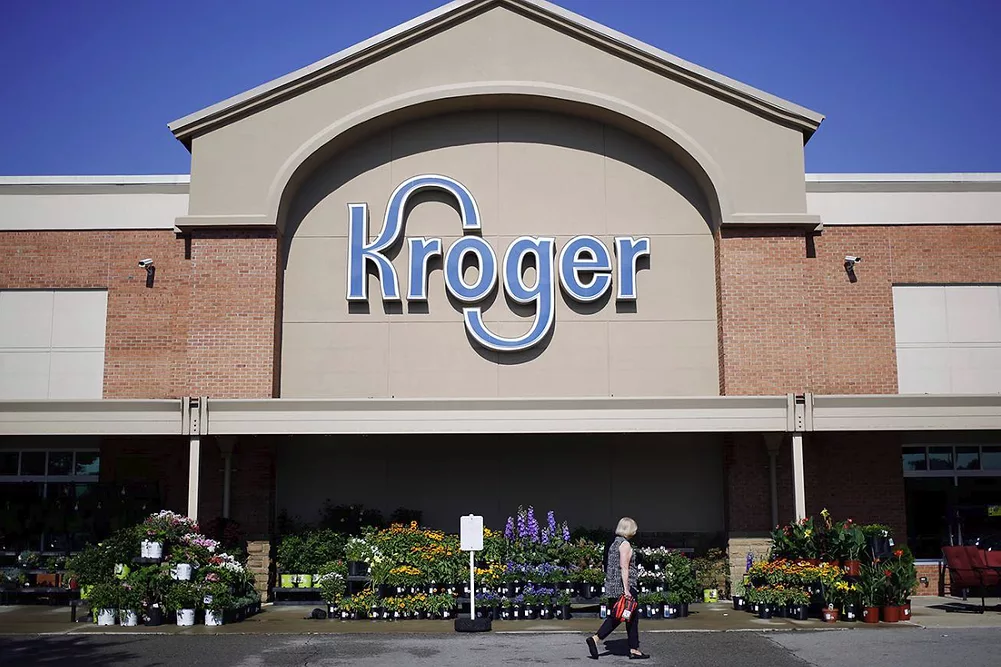
Kroger moves more pet food, litter and accessories through its aisles than almost any competitor, but the number that should interest a supplier is the compliance and logistics machine standing behind the shelf.
Kroger: Scale, Format and Footprint
- Founded: 1883, when Bernard Kroger opened his first grocery store in Cincinnati, Ohio.
- Founder: Bernard Kroger.
- Headquarters: Cincinnati, Ohio, United States.
- Ownership: Publicly traded (NYSE: KR), a component of the S&P 500.
- Scale / Revenue: Fiscal 2025 sales of $147.6 billion, up 0.4% year over year (sales excluding fuel rose 1.4% to $134.1 billion).
- Stores: Approximately 2,697 supermarkets as of early 2026, operating under banners including Kroger, Fred Meyer, King Soopers, Ralphs, and others.
- Workforce: About 403,000 employees.
- Leadership: Greg Foran was appointed chief executive officer; the company also emphasized a leadership transition during fiscal 2025.
- Customers: Value- and value-plus-quality-seeking grocery shoppers across urban, suburban, and rural markets.
Everyday Low Price, Engineered
Kroger operates a traditional supermarket model augmented by an expanding omnichannel ecosystem: pickup, delivery (via its own platform and partners such as Instacart, DoorDash, and Uber Eats), and a growing retail-media network. Fiscal 2025 delivered more than $16 billion in eCommerce sales, and the company completed a strategic review expected to drive eCommerce operating-profit improvement in 2026. Kroger’s “Our Brands” private-label program—including tiers such as Private Selection (premium), the flagship Kroger Brand, and Simple Truth (natural/organic)—is a central margin and loyalty driver.
Buying is centralized through a professional merchandising and sourcing organization, with strong category management and a push toward fresh, private-label, and alternative-profit businesses (retail media and data). For suppliers, Kroger rewards cost competitiveness, supply reliability, and private-label or exclusive capability, all delivered through a sophisticated supply-chain and replenishment system.
Kroger’s competitive strategy rests on disciplined execution across food leadership, digital, and alternative-profit streams, funded by operational efficiency. The company has built a significant retail-media and data business, Kroger Precision Marketing, which lets brand and private-label suppliers target shoppers with measurable return on ad spend. For pet suppliers, this means the path to shelf is increasingly tied to a broader commercial plan that may include digital media, loyalty-driven promotions, and shared data rather than assortment alone. Kroger supports Our Brands through a combination of dedicated private-label production and partnerships with contract manufacturers, giving it flexibility to scale owned-label pet products.
The Pet Aisle at Kroger
Pet products are a natural grocery adjacency for Kroger. The retailer carries pet food, treats, and litter under national brands and its own private-label pet lines within the “Our Brands” architecture. Because grocery shoppers buy pet consumables on a repeat basis, pet aligns with Kroger’s strength in consumables and its loyalty-driven, fill-the-basket trip. Simple Truth and the Kroger Brand give the company private-label pet positioning spanning value and natural/organic tiers.
The supplier opportunity includes: (1) private-label and exclusive pet-food, treat, and litter manufacturing under Our Brands; (2) natural and organic pet products aligned with the Simple Truth lineup; and (3) impulse and seasonal pet accessories placed near checkout and seasonal sets. Pet is not Kroger’s headline category, but its non-discretionary, repeat-purchase nature makes it a dependable contributor to basket size.
Within grocery, pet consumables benefit from Kroger’s emphasis on value and private label during inflationary periods, as shoppers increasingly trade down from premium national brands to owned-label alternatives. The retailer’s loyalty program captures detailed purchase data, enabling targeted pet promotions and repeat-purchase cycles. Suppliers can leverage this data partnership to optimize assortment by region and banner, since Kroger operates multiple regional banners with distinct customer profiles and price sensitivities. A value-tier pet SKU that performs in one region may need a natural or premium framing in another.
Passing the Kroger Gate
Kroger maintains rigorous food-safety, labeling, and responsible-sourcing standards. Suppliers of edible pet products must meet FDA and AAFCO-aligned labeling, supply-chain traceability, third-party testing, and facility-audit expectations. The retailer emphasizes product data quality (GS1/UPC compliance), on-time delivery, and fill-rate performance, and it operates sustainability and restricted-substance expectations for packaging and ingredients. Documentation supporting animal-welfare and sourcing claims is increasingly important for natural and premium lines.
Minimum order quantities reflect national distribution across roughly 2,700 stores. Exporters should engage through Kroger’s official merchandising and sourcing channels and be prepared for data-rich collaboration, including shared sell-through and replenishment visibility. Suppliers with private-label pet capability, strong U.S. compliance documentation, and the capacity to support national rollouts are best positioned.
Kroger’s supplier onboarding typically involves category-specific qualification, sample evaluation, and integration with its replenishment and data systems. Exporters should expect to provide product specifications, nutritional and safety documentation, and proof of regulatory compliance, and to participate in periodic business reviews where pricing, velocity, and service levels are assessed. The retailer’s scale means that even a modest pet assortment can represent meaningful volume, but consistency of supply is non-negotiable given its automated replenishment model.
2024-2026: Scale Meets Change
- Fiscal 2025 sales reached $147.6 billion, with identical sales (excluding fuel and adjustments) up 2.9% and adjusted diluted EPS up 8.5% to $4.85, reflecting underlying margin improvement despite a soft top line.
- Kroger delivered more than $16 billion in eCommerce sales and advanced a strategic review expected to improve eCommerce profitability in 2026.
- The company returned significant capital to shareholders, including a roughly 9.8% increase in the annual dividend per share and about $3.4 billion in share repurchases.
- Leadership transitioned with the appointment of Greg Foran as chief executive officer during fiscal 2025.
- Kroger continued measured store expansion, including investments in larger Marketplace-format stores, complementing a base of roughly 2,697 supermarkets.
- The company’s previously proposed merger with Albertsons was blocked by courts, leaving Kroger to pursue independent growth through private label, digital, and alternative-profit businesses.
A Realistic Entry Path
Kroger is a foundational grocery channel where private-label pet capability wins. Suppliers should lead with cost-effective, repeat-purchase pet consumables and differentiated natural/organic options that fit Our Brands tiers, and be ready to support national distribution with disciplined compliance and replenishment. The retailer’s eCommerce and retail-media momentum means suppliers should also think about digital shelf, promotions, and data collaboration, not just in-store placement. Although pet is an adjacency rather than a destination category, Kroger’s scale, loyalty base, and private-label ambition make it a stable, high-volume opportunity for pet exporters focused on the grocery trip.
Pet suppliers should also note Kroger’s regional-banner structure: a product that performs in the Midwest may need repositioning for West Coast or Southern banners. Building a modular assortment—value, natural, and premium tiers—lets the retailer tailor sets locally while suppliers maintain a single production base. Early engagement with Kroger’s pet and private-label teams, supported by compliance readiness and a clear margin story, is the most reliable route into this high-volume grocery channel.
— Scott Zhu, Founder, GlobalPetIndex
Sources & Related Reading
Related on GlobalPetIndex
- More Market Intel: Retail Channel
- Global Pet Brand Directory
- Walmart: The World’s Largest Retailer and a Mega-Channel for Pet Suppliers
- Target: Design-Led General Merchandise and the Pet Supplier Playbook
- Costco: The Membership Warehouse Model and a High-Reward Pet Account
