Hard discounters are the retail accounts pet exporters either win decisively or skip entirely, and Lidl is a clean example of why. With Approximately 12,600 stores in about 31 countries (Lidl GB alone reached its 1,000th store in 2025). and a model built almost entirely on owned brands, a single approved product can become a category-defining volume programme.
Lidl: The Discount Profile
- Founded: First modern Lidl discount store opened in 1973 in Ludwigshafen, Germany; the Schwarz family has been involved in retail since 1930.
- Founder / owner: Dieter Schwarz (Schwarz Group roots); the group is ultimately owned by the Dieter Schwarz Stiftung charitable foundation.
- Headquarters: Neckarsulm, Germany (Lidl Stiftung & Co. KG, part of Schwarz Gruppe).
- Scale / Revenue: Lidl store sales of EUR 132.1 billion in FY2024, up 5.3% year on year; Schwarz Group total revenue EUR 175.4 billion.
- Stores: Approximately 12,600 stores in about 31 countries (Lidl GB alone reached its 1,000th store in 2025).
- Workforce: Around 382,400 employees globally (Schwarz Group about 595,000).
- Logistics: More than 230 logistics centres and warehouses worldwide; owns shipping line Tailwind Shipping Lines.
- Owned pet brands: Orlando (dog food and treats) and Coshida (cat food, treats and cat litter).
| Metric | FY2024 Result |
|---|---|
| Schwarz Group revenue | EUR 175.4 billion (+4.9%) |
| Lidl store sales | EUR 132.1 billion (+5.3%) |
| Lidl + Kaufland stores | ~14,200 combined |
| Lidl stores (global) | ~12,600 in ~31 countries |
| Lidl GB stores | 1,000+ (milestone in 2025) |
The Lean Assortment Machine
Lidl blends food leadership with a strong non-food private-label matrix. Rather than carrying thousands of national brands, it consolidates non-food into a small number of owned brands: Parkside (tools), Crivit (sports), Livarno (home), Silvercrest (electronics), Esmara (apparel), Lupilu (baby) and, for pets, Orlando and Coshida. This “brand house” approach lets Lidl control quality, design and price while buying at enormous volume through central, cross-border purchasing. The discipline this creates is a core reason pet suppliers either love or avoid Lidl: the reward is huge, stable volume, and the cost is total specification control ceded to the buyer.
The buying cycle is structured and disciplined. Lidl typically runs a six-to-nine-month supplier onboarding and qualification process, applies 60-day payment terms, and imposes annual cost reductions of roughly 1% to 3%. Crucially, Lidl has zero tolerance for non-compliance: product safety, documentation and certification (CE, RoHS, BSCI and similar) are gating requirements, not negotiation points. Sustainability is also becoming a structural filter, with the Schwarz Group pursuing packaging reduction, deforestation-free supply chains and energy-efficient logistics that suppliers are increasingly expected to support. Suppliers that clear the bar gain access to a pan-European shelf, but they must accept centralised specification control and relentless efficiency demands, including the expectation that they continuously improve productivity to fund the annual price-down.
Owned Brands and the Pet Aisle
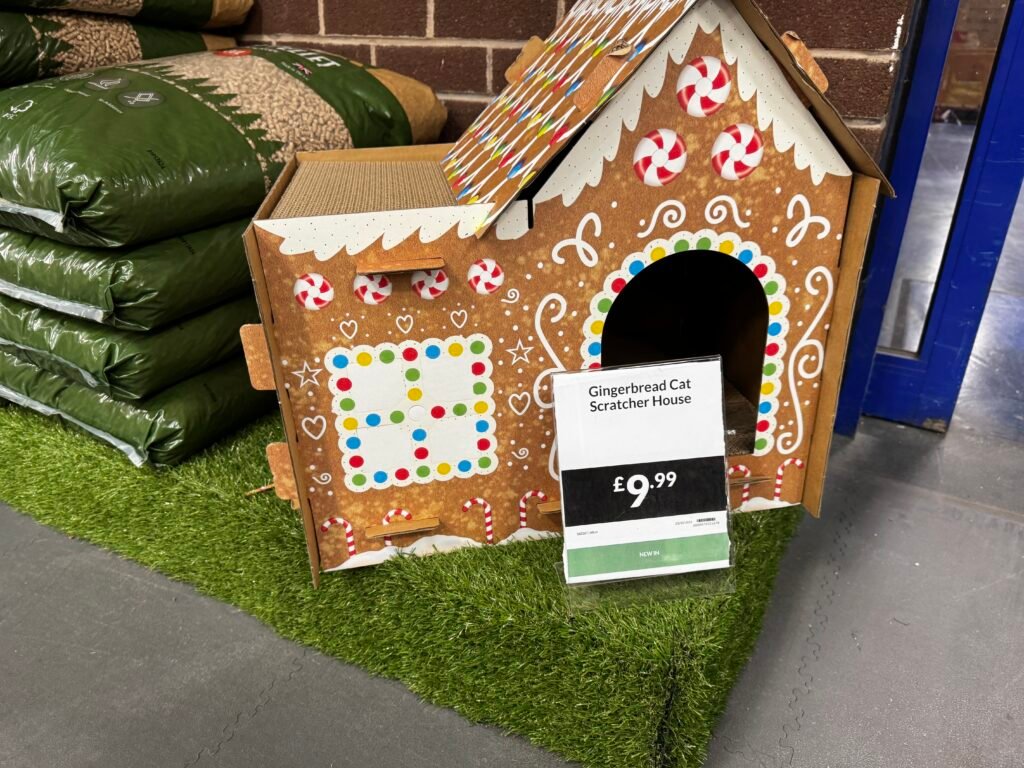
Pet is a well-established Lidl category. The retailer sells dog nutrition and treats under the Orlando brand and cat food, cat treats and cat litter under Coshida, both at the low everyday price points that define the chain. Beyond food, Lidl carries pet accessories in seasonal and non-food ranges, including toys, leashes, collars, beds and grooming items, often under its broader house brands or as rotating promotional lines. The chain’s promotional model also features pet accessories as limited-time non-food offers, which generate sharp volume spikes that suppliers must be ready to fill.
For suppliers, the opportunity spans both private-label pet food manufacturing and accessory supply. Because Lidl standardises specifications across markets, a successful pet item can be rolled out across many countries from a single development programme, creating very large, stable production runs. The value-tier pet owner is Lidl’s core demographic, so affordable nutrition and functional, no-frills accessories perform extremely well. Lidl’s limited assortment also means each pet SKU is a meaningful share of category volume, so a single approved line can translate into years of predictable, high-volume orders rather than fragmented national agreements. The trade-off is that losing an Lidl contract removes a very large, concentrated volume at once, so supply reliability and price discipline are existential to keeping the business.
What It Takes to Win a Lidl Listing
- Centralised buying: Lidl purchases non-food and private-label goods through central category teams, so suppliers typically deal with a regional or global buying unit rather than individual stores.
- Compliance zero tolerance: CE, RoHS, REACH and BSCI/Sedex social auditing are mandatory depending on product type; pet food must meet EU feed law (FEDIAF-aligned) and national requirements with full traceability.
- Documentation discipline: Lidl expects complete technical files, test reports and factory audit status before any listing; gaps are disqualifying.
- Cost-down mechanism: Annual price reductions of about 1% to 3% are standard; suppliers must continuously improve productivity.
- Payment and terms: Around 60-day payment terms; suppliers need balance-sheet resilience to absorb them.
- How to approach: Prepare a finished, certified private-label proposal aligned to the Orlando/Coshida pet-food specs or to Lidl’s accessory brand standards, with a full compliance dossier and proof of food-safety or manufacturing certification. A track record with other European discounters materially improves credibility.
In practice, Lidl’s pet-food suppliers are held to the same feed-safety and traceability regime as any EU retailer, but with the added expectation of recipe consistency across every market and every production batch. A supplier that changes a formulation without approval risks a continent-wide delisting, so change control discipline is as important as the initial certification. Exporters should also expect to support Lidl’s own logistics network, including its regional DCs and, in some cases, its Tailwind Shipping capability, which the group uses to control inbound freight cost and reliability.
The 2024-2026 Growth Surge
- FY2024 growth: Lidl store sales rose 5.3% to EUR 132.1 billion; the Schwarz Group added about 300 stores to reach roughly 14,200 across Lidl and Kaufland.
- UK milestone: Lidl GB opened its 1,000th store in 2025 and committed to double its British sourcing investment to GBP 30 billion over five years, while two-thirds of its GB products are already sourced from British suppliers.
- Investment surge: Schwarz Group raised investments 7.5% to EUR 8.6 billion in FY2024 and planned EUR 9.6 billion for FY2025, heavily weighted to store expansion, warehouses and data centres.
- Loyalty scale: The Lidl Plus app surpassed 100 million global users by 2025, strengthening the chain’s ability to target promotions including pet categories.
- US and beyond: Lidl continues measured US expansion (over 180 US stores) while deepening its European footprint, providing a stable, growing base for pet suppliers.
The Lidl Plus milestone deserves attention from pet suppliers: a loyalty app with more than 100 million users lets Lidl target pet promotions to specific shopper segments and measure redemption, which raises the value of a pet SKU that can be promoted through the app. The GB sourcing commitment also signals that Lidl will increasingly favor suppliers with local or near-shore production, a consideration for pet-food exporters weighing where to locate manufacturing to serve the British market competitively.
The Pet Supplier’s Playbook
Lidl rewards suppliers who can deliver certified, private-label pet products at continental scale. The path is stricter and slower than with a generalist retailer, but the prize is a multi-country, multi-year volume programme with exceptionally high repeatability. Pet-food manufacturers should pursue Orlando and Coshida private-label contracts by demonstrating feed-safety compliance, recipe capability and low-cost production; accessory makers should target Lidl’s seasonal and non-food pet ranges with CE/BSCI-ready proposals and the capacity to absorb promotional volume spikes.
Actionable takeaways: (1) invest early in EU pet-food regulatory approvals and full traceability; (2) build BSCI/Sedex and CE/REACH compliance before first contact; (3) design products to absorb 1% to 3% annual price-downs through productivity, not quality cuts; (4) prepare for a six-to-nine-month qualification cycle and strict change control; and (5) engage Lidl’s central buying team with a complete, market-ready dossier. Suppliers that clear Lidl’s bar gain a reference that signals quality and scale across the entire global discount channel, and a single approved pet line can become the backbone of a supplier’s export business for years.
— Scott Zhu, Founder, GlobalPetIndex
Sources & Related Reading
Related on GlobalPetIndex
- More Market Intel: Retail Channel
- Global Pet Brand Directory
- Aldi: The Transatlantic Hard Discounter and Its Heart to Tail Pet Strategy
- TEDi: Germany’s Variety-Discounter Expansion Story for Pet Accessories
- Kaufland: A Central and Eastern European Hypermarket Gateway for Pet Suppliers
