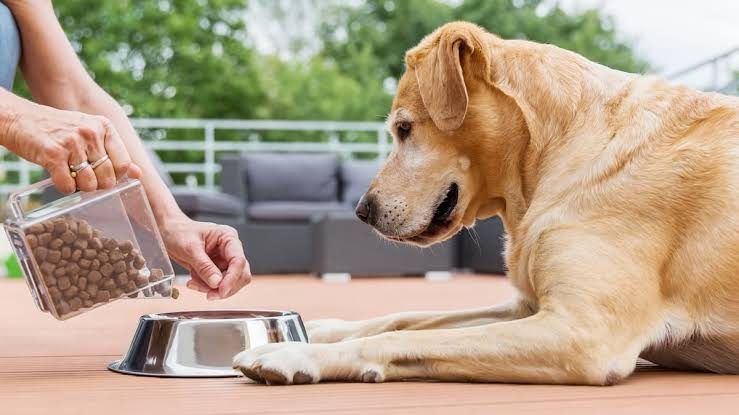
TL;DR: Only an estimated 3–4% of Indian pet owners feed their pets commercially manufactured pet food, leaving more than 95% still on home-cooked or table-scrap diets—the lowest penetration of any major economy and the largest “blue-ocean” opportunity in global pet care (Petfood Forum Asia, 2025).
About the india pet food penetration
India’s pet population is large and growing fast, but the way Indians feed their cats and dogs barely resembles the packaged-food routines of the US, Europe, or even China. According to Petfood Forum Asia (2025), commercial pet food reaches only 3–4% of Indian pet households, a figure that signals both a structural gap and a once-in-a-generation growth runway. Brands such as Drools (backed by a Nestlé stake), Mars Petcare (Pedigree, Whiskas), and challengers like PurePet and Godrej are spending heavily to convert the country’s millions of home-feeding owners into packaged-food buyers.
The headliner number: 3–4% commercial penetration
The single most important fact about the Indian pet food market is how few owners buy manufactured food. Petfood Forum Asia (2025) pegs commercial-food penetration at 3–4% of pet-owning households. For context, mature markets like the United States sit well above 90% commercial feeding, and even early-stage China is estimated in the low-to-mid double digits for urban cats and dogs.
This gap is not an accident of poverty alone. India’s pet ownership is rising quickly—industry estimates put the country’s dog-and-cat population in the tens of millions, concentrated in urban and peri-urban middle-class households—yet feeding culture still defaults to home-cooked rice, dal, roti, milk, and leftovers. Packaged kibble is perceived as a Western import, an urban luxury, or a product for “show dogs” rather than the family companion.
What does “penetration” actually measure?
Pet-food penetration typically refers to the share of pet-owning households that purchase any commercially formulated pet food (dry, wet, or treats) in a given period. A 3–4% figure means that out of every 100 Indian homes with a dog or cat, only three or four buy branded food regularly; the rest rely on human-kitchen diets or local butcher/scrap sourcing.
Why the number is so low
- Cultural feeding norms: Pets are often fed from the family plate; “pet food” as a category is new to many households.
- Price sensitivity: A kilogram of branded kibble can cost several times the price of home-prepared meals, a meaningful gap for first-time owners.
- Skepticism about processed food: Many owners believe fresh home cooking is healthier than “factory” food.
- Distribution gaps: Outside metro cities, modern retail and e-commerce penetration for pet SKUs remains thin.
- Low veterinary influence: Routine wellness visits—where vets typically recommend commercial diets—are less common than in Western markets.
Why India is the “blue-ocean” of global pet food
Industry analysts call India a blue-ocean market because the addressable base of unconverted owners dwarfs the converted one. With ~96% of pet owners still feeding homemade diets, even a modest shift toward commercial food compounds into enormous volume.
The economic logic is simple: if penetration moves from 3–4% toward, say, 15–20% over the coming decade—still far below global norms—the category could multiply several times over without the total pet population changing much at all. That is why multinationals and local players are investing now rather than waiting.
The players converting the market
Drools — India’s homegrown unicorn
Drools, owned by Indian parent IB Group with a strategic Nestlé stake, became India’s third consumer unicorn after crossing a $1 billion valuation, operating across 40,000 retail points (Economic Times, 2025). Drools competes on price accessibility and a wide mass-market distribution network, making it one of the few brands present in tier-2 and tier-3 cities.
Mars Petcare
Mars (Pedigree, Whiskas, Royal Canin) leverages global brand equity and premium positioning, especially in metros where urban professionals are more likely to adopt Western feeding habits. Mars also holds an estimated 18–22% share of the global natural/premium pet food segment (Mars Petcare / globenewswire, 2025), giving it science-led marketing firepower in India’s premium tier.
Nestlé Purina
Nestlé Purina recorded ~CHF 18.4 billion (~$22.15 billion) in Purina PetCare sales in 2025 (Nestlé results, 2025), the world’s #1 cat-food business, and is expanding its reach into price-sensitive emerging markets like India through local manufacturing and format innovation.
Local challengers
Domestic players such as PurePet, Godrej (Goodness), and Bharat Pet Foods compete on affordability and regional distribution, often undercutting multinationals to win first-time buyers who might otherwise keep feeding from the kitchen.
How penetration could climb
Urbanization and the nuclear family
India’s rapid urbanization is creating smaller, nuclear households with disposable income and less time for home preparation. Younger owners in cities like Bengaluru, Mumbai, Delhi, and Hyderabad are the most receptive to packaged food—and they are the wedge that lifts national penetration.
E-commerce and quick commerce
Platforms such as Amazon, Flipkart, and quick-commerce apps are making branded food discoverable outside physical pet stores. Subscription models—proven by Chewy’s Autoship driving 83.3% of revenue in the US (Chewy IR, 2025)—are beginning to appear in India, locking in repeat purchases once an owner converts.
Veterinary and breeder influence
As India’s veterinary network expands and pet clinics professionalize, the “vet recommended commercial food” pathway—central to Western markets—will accelerate conversion. Brands are already funding vet education and clinic partnerships.
Premiumization without losing the mass base
The winning playbook appears to be a two-track strategy: cheap, accessible mass kibble to acquire the 96%, plus premium and functional lines (like Royal Canin and drools’ higher-tier ranges) for affluent urban owners. This mirrors how China’s market developed a value-to-premium ladder.
India in regional context
India sits at the opposite end of the spectrum from its neighbors:
- China urban dog+cat spend reached ¥312.6 billion (+4.1%) in 2025 (China Pet White Paper, 2025), with much higher commercial-feeding rates in cities.
- Thailand pet food exports rose +25% (Ken Research, 2024), positioning SE Asia as a supply platform that also feeds regional demand.
- APAC pet care overall hit $42.16 billion (2024) at a 6.01% CAGR (Market Data Forecast, 2024), with India among the fastest-growing bases by population, if not yet by spend.
The takeaway: India’s pet population is already large, but its pet spend per animal is tiny—exactly the profile of a market where penetration gains, not just pet-count growth, drive the category.
Risks and headwinds
- Affordability shocks: Inflation in staples makes branded food a discretionary cut when household budgets tighten.
- Regulatory maturity: India’s pet-food standards and labeling enforcement lag global norms, which can slow premium-import positioning.
- Counterfeit and quality fears: Low trust in processed pet food means one quality scandal can push owners back to home cooking.
- Fragmented retail: Reaching beyond metros requires costly distribution build-out.
What to watch in 2025–2027
- Penetration ticks: Whether the 3–4% figure rises even 1–2 points—small moves mean large volume.
- Drools’ international push: Can India’s unicorn export the way Thailand does?
- Nestlé and Mars local manufacturing: More local plants usually signal confidence in volume growth.
- Premium cat food: India’s rising cat ownership could echo the “cat renaissance” seen in the US and China (Packaged Facts, 2025).
Distribution, retail, and the road to scale
Modern trade versus traditional channels
India’s pet-food retail splits sharply between modern trade (supermarkets, specialty pet stores, e-commerce) and traditional channels (kirana shops, vet clinics, open markets). Penetration growth depends on pushing branded SKUs into the latter, where most non-metro owners still shop. Multinationals leverage modern retail and online; local players like Drools win on traditional reach.
The e-commerce and quick-commerce effect
As in China, India’s digital commerce is the fastest route to trial. Subscription and marketplace models lower the “first bag” friction. Chewy’s US proof point—Autoship driving 83.3% of revenue (Chewy IR, 2025)—shows that recurring delivery is the engine that converts a one-time buyer into a lifer; Indian platforms are importing the playbook.
The street-dog and adoption dynamic
India has a large population of community/street dogs fed by households and charities rather than owned in the Western sense. As adoption formalizes and urban owners humanize these animals, commercial food demand rises—a demand source largely absent in Western markets and a uniquely Indian volume lever.
Pricing architecture for a price-sensitive base
Winning brands use price-laddering: an entry kibble cheap enough to beat home cooking, a mid tier for regular converters, and a premium tier for affluent urbanites. This mirrors how emerging-market FMCG builds category habit before premiumization.
The role of veterinarians and breeders
In India, the vet visit is less routine than in the US, but breeders and boarding/kennel operators are influential first-touch points. Brands funding breeder education and clinic sampling accelerate the shift from home food to commercial diets.
The investment thesis in one paragraph
India is the rare market where the constraint is not pet population but category adoption. With ~96% of owners still outside commercial food, the total addressable base dwarfs the served market. The winners will be those that build distribution into traditional channels, localize price tiers, and earn veterinary endorsement—exactly the levers Drools, Mars, and Nestlé are pulling in 2025.
Related reading
- India’s commercial pet food penetration explained
- APAC pet market size and growth
- Why Drools became India’s pet-food unicorn
FAQ
What is India’s current commercial pet food penetration?
Petfood Forum Asia (2025) estimates that only 3–4% of Indian pet owners purchase manufactured pet food, meaning more than 95% still feed home-cooked or scrap diets.
Why is pet food penetration so low in India?
Low penetration reflects cultural home-feeding norms, price sensitivity, weak veterinary-diety pathways, limited modern retail distribution outside metros, and skepticism toward processed pet food.
Which companies are trying to grow India’s pet food market?
Drools (a Nestlé-stake unicorn), Mars Petcare (Pedigree, Whiskas, Royal Canin), Nestlé Purina, and local players like PurePet and Godrej are all expanding distribution and education to convert home feeders.
Is India’s pet food market expected to grow?
Yes. Because ~96% of owners remain unconverted, even small gains in penetration could multiply category volume several times; analysts describe it as the world’s largest pet-food “blue-ocean.”
How does India compare to China on pet food adoption?
China’s urban pet spend reached ¥312.6 billion in 2025 with far higher commercial-feeding rates, while India’s spend per animal remains far lower despite a large pet population—leaving more upside from penetration alone.
Sources
- Petfood Forum Asia (2025): Commercial pet-food penetration in India is 3–4%, a blue-ocean market.
- Economic Times (2025): Drools crossed a $1B valuation (India’s third consumer unicorn) with 40,000 retail points.
- Mars Petcare / globenewswire (2025): Mars holds an estimated 18–22% of the global natural/premium pet food segment.
- Nestlé results (2025): Purina PetCare sales ~CHF 18.4B (~$22.15B), global #1 cat food.
- Chewy IR (2025): Autoship subscription drove 83.3% of Chewy revenue, a model now emerging in India.
- China Pet White Paper (2025): China urban dog+cat spend ¥312.6B (+4.1%).
- Ken Research (2024): Thailand pet food exports +25%.
- Market Data Forecast (2024): APAC pet care $42.16B, 6.01% CAGR.
- Packaged Facts (2025): “Cat renaissance” and rising cat ownership in Asia.
