TL;DR: The global pet food market is valued at $136.6 billion in 2025 and is forecast to grow at a ~4.2% CAGR through 2034, with North America holding a 42.5% share, according to IMARC. Cats and fresh formats are the fastest-growing slices.
About the global pet food market
Pet food is the gravitational center of the entire pet economy. In 2025 the global pet food market is worth an estimated $136.6 billion, per IMARC data cited on LinkedIn, growing at roughly 4.2% CAGR through 2034 and concentrated in North America at 42.5% of value. This article explains the size, the growth drivers, the format shifts (kibble to fresh), and the competitive landscape that defines the world’s largest pet category.
What Is the Global Pet Food Market Size in 2025?
The core number is $136.6 billion in 2025 global pet food retail value (IMARC,). That represents the bulk of the ~$207 billion global pet care market we cover in our global pet market 2025 report—food and treats typically make up roughly half to 60% of all pet care spend.
The 4.2% CAGR to 2034 implies a market approaching ~$200 billion by the early 2030s, assuming steady premiumization and emerging-market penetration. This is a “real growth plus price” compound: pet counts rise slowly in mature markets, but per-pet spend climbs through premiumization.
How Is the Pet Food Market Structured?
Pet food splits along three axes:
By format
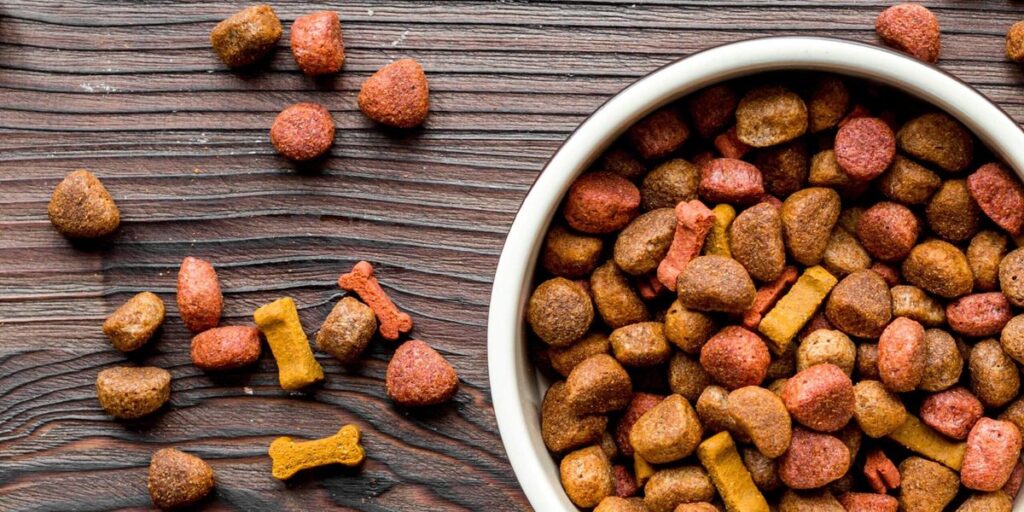
- Dry/kibble — still the volume leader by tonnage, value-dense and shelf-stable.
- Wet/canned — higher margin, strong in cats; Nestlé leads cat wet at 76.4% share (Cascadia Capital/Bloomberg Intelligence).
- Fresh/refrigerated/frozen — the highest-velocity growth pocket. NielsenIQ shows refrigerated/frozen dog food +13.4% while total dog food fell −0.2%.
- Freeze-dried/raw — niche but premium; Stella & Chewy’s leads freeze-dried dog food.
By species
- Dog food — larger absolute base but slower ~3.8% CAGR.
- Cat food — faster ~6% CAGR and the strategic priority (see our cat food market report).
By price tier
From value private-label to super-premium veterinary and fresh. Critically, the four CPG giants (Nestlé, Mars, and peers) now span all tiers (Cascadia Capital/Bloomberg Intelligence), squeezing pure-play mid-market challengers—yet leaving white space at the fresh/DTC extreme.
Why Is North America 42.5% of the Market?
North America’s 42.5% share (IMARC,) reflects the highest per-pet expenditure on earth, deep retail infrastructure (Chewy, PetSmart, Petco), and an advanced fresh-food scene. The US alone spent $158 billion across all pet categories in 2025 (APPA; see US pet spending). US fresh pet food is forecast to leap from $1.38B (2025) to $9.64B (2035) (Emergen Research), buttressing North America’s dominance.
What Is Driving Pet Food Growth?
Premiumization and “health-ification”
Owners equate price with quality. Veterinary diets, limited-ingredient, grain-free (where vet-appropriate), and functional formulations lift average selling prices. Humanization data: 43.6% of owners prioritize pet food health over their own (Pride and Groom).
The fresh and functional wave
Fresh dog food grew +13.4% (NielsenIQ). Functional treats blur snacks with therapy—soft-chews are 42% of supplements (NIQ). This trades kibble tonnage for higher-value meals.
Emerging-market penetration
India’s commercial-food penetration is only 3–4% (Petfood Forum Asia), and China’s fresh penetration is under 5%. Each point of penetration in billions-of-households markets adds enormous volume. The cat renaissance (Packaged Facts) further lifts per-pet food spend.
Who Leads the Global Pet Food Market?
The competitive set is concentrated but layered:
- Mars Petcare — Royal Canin, Pedigree, Whiskas, Sheba, Nutro, Crave, plus 2025 acquisition of Champion (Orijen/Acana). Estimated 18–22% share of natural/premium segments (Mars/globenewswire; see Mars share).
- Nestlé Purina — global #1 in cat food; 2025 sales ~CHF 18.4B (~$22.15B), 20.6% of group (Nestlé; see Nestlé Purina). Cat wet share 76.4%.
- Hill’s (Colgate) — vet-recommended science diets; 2025 net sales +2.9%, Q4 +4.9% (Colgate; see Hill’s).
- Challengers — Freshpet (refrigerated, $1.10B FY2025), The Farmer’s Dog (~$1.2B ARR), Smalls (~$100M cat fresh), Butternut Box (£126.7M).
For the full competitive map, see our CPG giants market share report.
How Does Regulation Shape the Market?
Three 2025 forces matter:
- EU PPWR (2025/40) — mandates recyclable packaging and PCR content; non-recyclable banned from 2030 (Global PETS). Reshapes packaging cost.
- FDA–AAFCO rift — disagreement on ingredient definitions and labeling slows new-ingredient launches (BSM Partners).
- H5N1 food-safety rules — the 2025 avian flu pushed FDA-CVM to require H5N1 risk in pet-food safety plans, tightening raw/fresh controls (BSM Partners).
How Do Private Label and DTC Fit the Pet Food Market?
Private label and direct-to-consumer are the two non-giant forces reshaping the $136.6B market.
Private label
Store brands (Costco, Aldi, and retailer-owned lines) compete hardest at the value tier, where giants’ “span all tiers” strategy still leaves margin for discounters. Private label is strongest in Europe and growing in the US, but lags in wet and veterinary where quality replication is hard.
DTC and fresh
DTC fresh (The Farmer’s Dog ~$1.2B ARR, indexed.vc/LinkedIn; Ollie $112.65M raised, CB Insights/LinkedIn; Smalls ~$100M cat fresh) captures the premium edge giants cede. These brands monetize subscription LTV rather than shelf share, and their +13.4% velocity (NielsenIQ) proves the model scales.
The strategic gap
The four CPG giants (Nestlé, Mars, Hill’s, General Mills) are strong across value-to-ultra-premium but weak in refrigerated/fresh DTC. That gap is where most 2025 growth and most M&A urgency comes from (see CPG giants).
What Is the Long-Run Outlook to 2034?
IMARC models ~4.2% CAGR through 2034, implying a market approaching ~$200B. The Global Pet Index’s base case assumes: (1) cats keep outgrowing dogs (~6% vs ~3.8%, Euromonitor); (2) fresh keeps taking kibble share; (3) emerging markets (India 3–4% penetration, Petfood Forum Asia; China fresh <5%, Toutiao/Euromonitor) convert gradually. Downside risks are tariffs (6%→35%, Global PETS), vet capacity (243 shortage areas, AVMA/USDA), and regulatory cost (EU PPWR, H5N1, FDA–AAFCO rift, BSM Partners/Global PETS).
Related reading
FAQ
What is the global pet food market size in 2025?
$136.6 billion, per IMARC (2025).
What is the pet food market CAGR to 2034?
Approximately 4.2%, per IMARC.
What share does North America hold?
42.5% of the global pet food market (IMARC,, 2025).
Which pet food format is growing fastest?
Refrigerated/frozen fresh, with dog food up +13.4% while total dog food fell −0.2% (NielsenIQ).
Who leads the market?
Mars (Royal Canin, etc.), Nestlé Purina (global #1 cat food), and Hill’s, plus fresh challengers like Freshpet and The Farmer’s Dog.
Sources
- IMARC (2025) —; global pet food $136.6B, ~4.2% CAGR to 2034, North America 42.5%.
- Euromonitor / Quora (2025) —; global pet care ~$207B; cat food CAGR ~6% vs dog ~3.8%.
- APPA (2025) —; US pet spending $158B (+3.7%).
- NielsenIQ (2025) —; refrigerated/frozen dog food +13.4% vs total −0.2%.
- Cascadia Capital / Bloomberg Intelligence (2025) —; Nestlé cat wet 76.4%, Mars dog wet 64.7%; giants span all tiers.
- Emergen Research (2025) —; US fresh pet food $1.38B (2025) to $9.64B (2035).
- Pride and Groom (2025) —; 43.6% prioritize pet food health over own.
- NIQ (2025) —; functional soft-chew 42% of supplements.
- Petfood Forum Asia (2025) —; India penetration 3–4%.
- Toutiao / Euromonitor (2025) —; China fresh penetration <5%.
- Packaged Facts (2025) —; cat renaissance.
- Mars / globenewswire (2025) —; Mars 18–22% natural/premium.
- Nestlé (2025) —; Purina ~CHF 18.4B, 20.6% of group.
- Colgate / Hill’s (2025) —; Hill’s +2.9% FY, Q4 +4.9%.
- Freshpet IR (2025) —; $1.10B net sales.
- Indexed.vc / Smalls / Butternut Box (2025) —; challenger revenues.
- Global PETS (2025) —; EU PPWR 2025/40.
- BSM Partners (2025) —; FDA–AAFCO rift; H5N1 safety rules.
