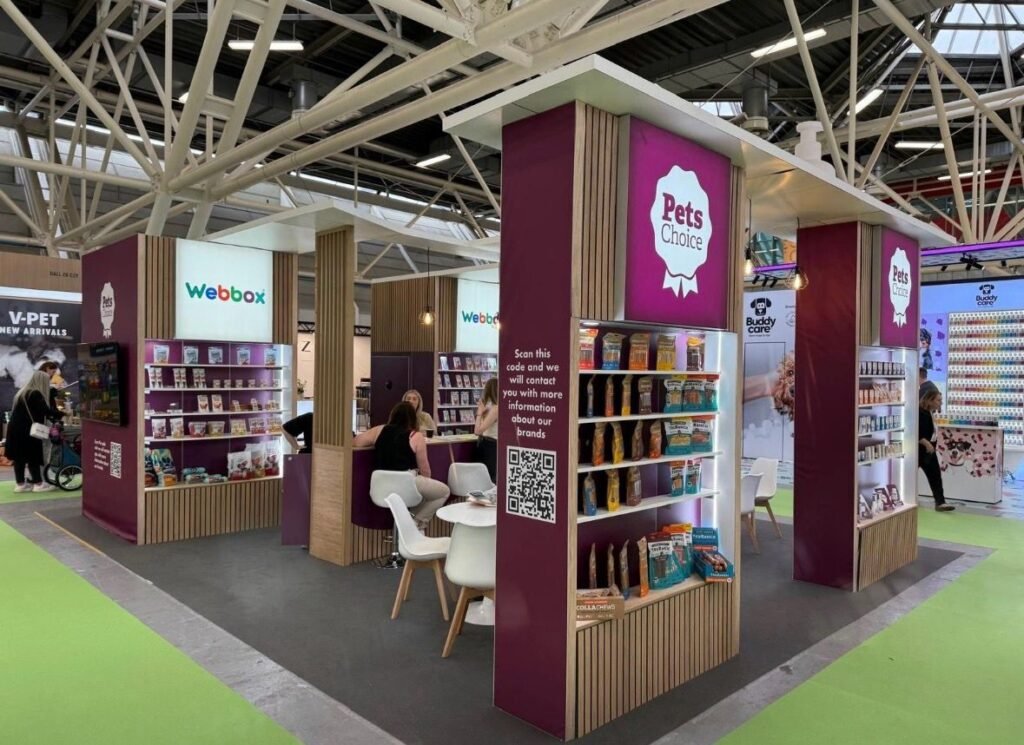
The pet aisle of a Action store tells the whole story in a handful of SKUs: own-brand products doing the work of an entire category. That concentration is what makes Action both demanding and lucrative for suppliers.
Action: The Discount Profile
- Founded: 1993 (first store opened in Enkhuizen, Netherlands)
- Founders: Gerard Deen and Rob Wagemaker
- Headquarters: Zwaagdijk-Oost, Netherlands
- Ownership: Majority-owned by 3i Group (UK private equity); management and employees hold the remainder
- Chief Executive: Hajir Hajji
- Business type: Non-food variety discounter (“Where the same costs less”)
- Scale / Revenue: EUR 16.0 billion net sales in 2025, up 16.1% versus 2024; operating EBITDA EUR 2,367 million, up 14%
- Stores: 3,302 stores across 14 countries at end of 2025 (384 new stores opened during the year)
- Workforce: 84,246 colleagues representing 166 nationalities
- Customers: Average of 21.6 million customer visits per week in 2025, up 15.5% year on year
- Product categories: Approximately 14 non-food categories, including home, garden, hobby, seasonal, and pet-related items
| Metric | FY2025 Result |
|---|---|
| Net sales | EUR 16.0 billion (+16.1%) |
| Operating EBITDA | EUR 2,367 million (+14%) |
| Stores (year-end) | 3,302 in 14 countries |
| New stores opened | 384 (more than one per day) |
| Weekly customers | 21.6 million |
| Distribution centres added | 3 new DCs in 2025 |
The Lean Assortment Machine
Action’s formula is the purest expression of European hard discounting applied to non-food. The company carries roughly 6,000 stock-keeping units, refreshes the assortment with around 150 new products every week, and keeps prices extreme: approximately 1,500 items are priced below EUR 1.00 and about two-thirds of the range sells for under EUR 2.00. Critically, only about one-third of the assortment is permanent; the rest is rotated continuously, which means suppliers are judged on a relentless cycle of novelty, price and speed rather than on long-term shelf presence.
Action concentrates its buying power. Rather than spreading volume thinly across many vendors, it works with a compact, tightly managed supplier and factory network so that it can drive down unit cost, guarantee continuity of quality, and enforce compliance at scale. Products are sourced globally, with a very significant share coming from Asian factories, and then distributed through a fast-growing European logistics footprint. The buyer’s question is never “is this a nice product?” but “can this be made well, certified clean, and delivered cheaply enough to sell at a fixed low price while still leaving us a margin?”
For suppliers, the format rewards three things above all: lowest sustainable cost, rock-solid compliance, and the ability to ramp volume quickly when an item is selected. Action is not a negotiation-every-line retailer; it is a take-it-or-leave-it volume machine, and that is precisely why it is attractive to factories that can win on cost and capacity.
Owned Brands and the Pet Aisle
Pet products sit squarely inside Action’s non-food world. The chain serves millions of budget-conscious households, many of whom own cats, dogs, small animals, fish or birds, and pet accessories, toys, grooming tools, bedding, feeding bowls, litter accessories and seasonal pet items all fit the company’s low-price, high-turn philosophy. Because Action’s customer is price-driven rather than brand-loyal, private-label and unbranded pet items perform extremely well, and there is continuous demand for fresh, inexpensive pet novelty.
The opportunity for pet suppliers is twofold. First, there is the standing assortment: everyday pet essentials that must be available week after week at a fixed low price. Second, there is the rotating “surprise” range: pet toys, seasonal costumes, travel accessories and gift-style items that change constantly and feed the treasure-hunt shopping experience. Suppliers that can combine a stable core range with a steady stream of new pet novelties are the ones Action’s buying teams look for.
Pet items also benefit from Action’s sustainability narrative. The company reports that, for the cotton, timber, cocoa, coffee and palm-oil content of its in-scope private- and white-label products, more than 99% is certified sustainable. Pet products that use responsibly sourced materials, recycled plastics or certified wood have a clear edge in the selection process.
What It Takes to Win a Action Listing
Action treats compliance and sustainability as hard gates, not nice-to-haves. Suppliers should expect the following expectations:
- Ethical auditing: Action operates under a robust ethical sourcing programme aligned with BSCI (Business Social Compliance Initiative) principles. Factories must demonstrate safe working conditions, fair labour practices and traceable supply chains.
- Product certifications: Depending on material, suppliers may need FSC (forest products), RSPO (palm oil), GRS or recycled-content proof, and food-contact or chemical-safety documentation for relevant pet items.
- Climate commitments: Action’s near-term emissions-reduction targets are validated by the Science Based Targets initiative (SBTi). Suppliers are increasingly expected to measure and reduce their own carbon footprint, with the company targeting 80% of suppliers (by emissions) to have validated science-based targets by 2029.
- Cost discipline: Pricing is fixed at the shelf; there is little room for annual increases. Suppliers must engineer cost out through scale, material substitution and logistics efficiency.
- Quality and packaging: Action eliminated PVC and black plastic from primary packaging for in-scope products, achieved 100% sustainable cardboard, and cut overall packaging weight. Pet suppliers must meet these packaging rules.
- How to approach: The realistic route is through Action’s central buying organisation in the Netherlands rather than individual country units. New suppliers should prepare a concise, low-price proposal with compliance certificates, factory audit status, and proof of volume capacity. A track record with other European discounters (Lidl, Aldi, TEDi, Pepco) is a strong credential.
The 2024-2026 Growth Surge
- 2025 record year: Net sales reached EUR 16.0 billion (+16.1%), with 384 new stores and entry into two new countries, Switzerland (8 stores) and Romania (6 stores).
- Sustainability validation: In 2025 Action’s near-term science-based emissions targets were validated by SBTi, and the company reported a 56% reduction in operational emissions versus its 2021 baseline.
- Fairtrade first: Action became the first international retailer to commit to enabling cocoa farmers supplying its private-label chocolate to earn a living income.
- 2026 expansion: Action plans at least 400 new stores and entered Croatia in March 2026, with Slovenia to follow after summer. Initial Croatian customer response was exceptionally strong.
- Future markets: Bulgaria is targeted for 2027, and a United States launch is planned for late 2027 or early 2028, which would open an entirely new continent of volume for prepared suppliers.
- Logistics build-out: Three new distribution centres were opened in 2025, strengthening the company’s ability to absorb even faster store growth.
The Pet Supplier’s Playbook
Action is not an easy customer, but it may be one of the most rewarding for the right factory. The scale is enormous and still accelerating, the model favours private-label and unbranded pet goods, and a single approved item can be rolled out across more than 3,300 stores almost overnight. The barriers are real: you must clear ethical and environmental compliance, meet strict packaging rules, and accept fixed low prices with no annual inflation uplift.
The practical playbook for pet suppliers is to (1) obtain and maintain BSCI or equivalent social auditing, (2) build a compliance dossier covering materials, chemicals and recycled content, (3) design pet products specifically for extreme price points (sub-EUR 1 and sub-EUR 2 tiers), (4) develop a pipeline of novelty pet items to feed the rotating assortment, and (5) demonstrate the capacity to scale from pilot to pan-European volume without quality drift. Suppliers already servicing other hard discounters should lead with that reference. Those who prepare now will be positioned to capture Action’s 2027-2028 push into Bulgaria and the United States.
— Scott Zhu, Founder, GlobalPetIndex
Sources & Related Reading
Related on GlobalPetIndex
- More Market Intel: Retail Channel
- Global Pet Brand Directory
- Aldi: The Transatlantic Hard Discounter and Its Heart to Tail Pet Strategy
- Lidl: Schwarz Group’s Discount Powerhouse and Its Orlando and Coshida Pet Brands
- TEDi: Germany’s Variety-Discounter Expansion Story for Pet Accessories
