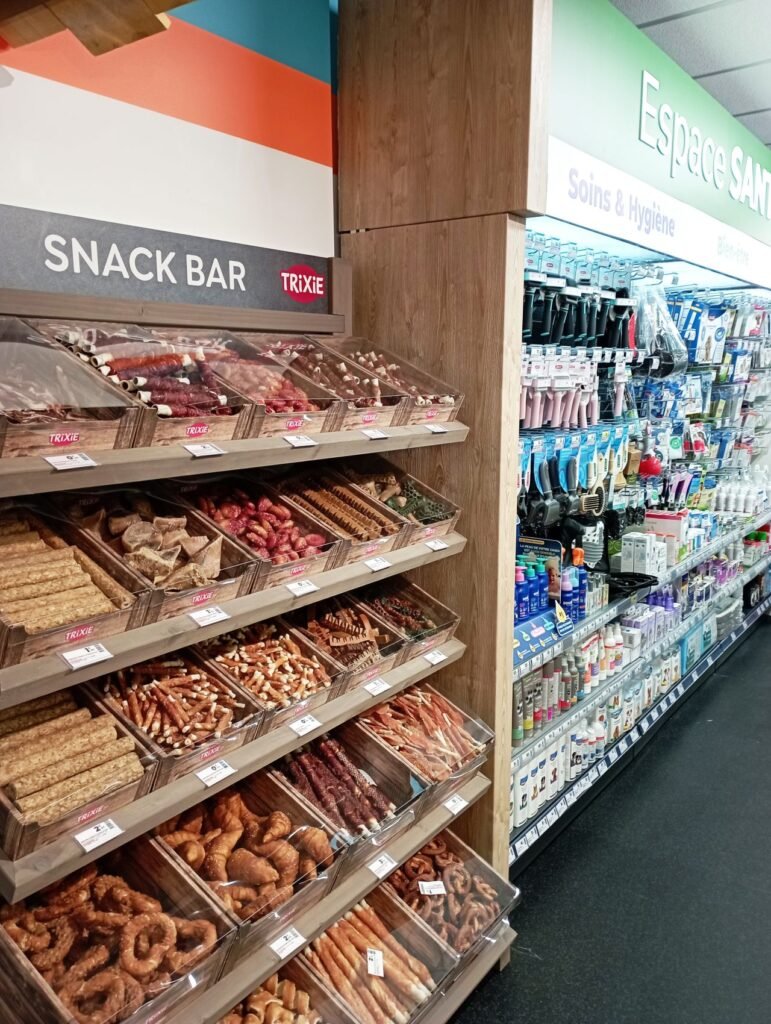
Variety-value retail runs on treasure-hunt assortment, and Pepco Group is where pet accessories and closeout lines find a fast, high-turn home.
Pepco Group: A Variety-Value Channel
- Banner / structure: Pepco Group N.V. is a Netherlands-incorporated holding company that operates the Pepco, Poundland and Dealz variety-retail banners.
- Origins: The Pepco banner launched in Poland in 2004 and grew into a pan-CEE variety chain; the group is majority-controlled by Steinhoff International.
- Headquarters: Group registered in the Netherlands; operational management centred on Central Europe with a large Polish footprint.
- Scale / Revenue: Full-year 2024 revenue of EUR 6,166.75 million (about EUR 6.2 billion), up 10.2% year on year; underlying EBITDA of EUR 944 million.
- Stores: 4,948 stores as of 30 September 2024, comprising Pepco 3,781, Poundland 836 and Dealz 331, across more than a dozen European markets.
- Profitability: Gross margin 43.9%; the group posted a net loss of EUR 662 million after a EUR 775 million impairment related to Poundland.
- Leadership: Stephan Borchert became Chief Executive Officer effective 1 October 2024, leading a renewed focus on the Pepco CEE core.
| Metric | FY2024 Result |
|---|---|
| Group revenue | EUR 6.17 billion (+10.2%) |
| Underlying EBITDA | EUR 944 million |
| Gross margin | 43.9% |
| Total stores | 4,948 (Pepco 3,781 / Poundland 836 / Dealz 331) |
| Net new stores | 392 in FY2024 |
Treasure-Hunt Assortment
Pepco runs a classic variety-discount model: small to mid-sized neighbourhood stores, an extreme value price architecture, and a high proportion of private-label and unbranded goods. The assortment is edited rather than exhaustive, which keeps complexity low and turns inventory quickly. Price points are deliberately accessible, with a large share of the range positioned for impulse and everyday household spend, and the pet category sits comfortably inside that value-oriented basket.
The buying function is centralised and volume-driven. Pepco purchases through category teams that negotiate pan-regional or pan-banner frameworks, then localise where necessary for language, regulation and consumer preference. Suppliers are expected to support aggressive opening price points, absorb efficiency-driven cost-downs over time, and deliver against strict lead-time and fill-rate standards. Because the model depends on fast-moving, low-cost goods, suppliers that can industrialise production and protect margin at scale are the ones that win repeat programmes.
Pepco’s real estate strategy reinforces the value model. Stores are deliberately small-footprint and located on high streets, in retail parks and in residential catchments, which keeps rent and labour costs low and lets the group open doors rapidly across Central and Eastern Europe. That footprint favours pet accessories and non-food that can be merchandised in a compact pets or household aisle, and it means suppliers should design for a small, frequently rotated shelf rather than a deep range. The group’s buying is also increasingly private-label-led: owned brands protect margin and differentiate the assortment from pure branded discounters, so suppliers able to manufacture to a Pepco specification rather than only their own brand have a clearer path to repeat volume.
Pet as Impulse and Adjacency
Pet is a natural fit for the Pepco value model. The chain carries pet accessories, toys, grooming, bedding and feeding items, and it leans on affordable, private-label-led pet nutrition where the regulatory environment allows. The typical Pepco shopper is a price-conscious household that still spends on pets, making functional, good-value pet products a dependable performer rather than a premium niche.
For suppliers, the opportunity is twofold. First, accessories and non-food pet items translate cleanly across the variety format and can be listed chain-wide with minimal adaptation. Second, the group’s expansion into new CEE markets multiplies the addressable shelf each year, so a single approved pet line can scale rapidly as store count grows. Pet accessories also suit the impulse, destination-aisle merchandising that Pepco uses to drive basket size.
Pet nutrition at Pepco is selective rather than comprehensive. Where national feed rules and consumer trust allow, the chain lists affordable own-label dry food and treats, but it is cautious about wet food and chilled pet lines that add complexity and shrink. The bigger, lower-risk opportunity is non-food: toys, grooming, bedding, feeding and travel accessories that carry no feed-compliance burden and turn on impulse. Suppliers should therefore prioritise accessories and treats for a first listing, prove the line in the CEE core, then expand into nutrition once the ranging relationship is established. Seasonal pet lines such as Christmas, summer and back-to-school-adjacent items also suit Pepco’s calendar-driven, novelty-led merchandising.
Closeout and Supplier Flexibility
- Centralised category buying: Suppliers engage Pepco Group category teams for framework agreements rather than individual stores; the Pepco banner is the primary growth engine.
- Value engineering: Opening price points are sacrosanct; suppliers must design cost out continuously while holding quality.
- Compliance basics: CE marking, REACH and RoHS apply to relevant accessories and electronics; pet food must meet EU feed law and national requirements with full traceability and labelling in local languages.
- Social auditing: BSCI or Sedex membership and a clean audit history are increasingly expected for owned-brand suppliers, especially in soft goods and plastics.
- Service levels: Tight lead times and high fill rates are required to keep the fast-turning assortment in stock across thousands of doors.
- How to approach: Lead with a ready-to-list, private-label or unbranded pet range priced for the value tier, backed by a compliance dossier and proven low-cost manufacturing.
2024-2026 Store Growth
- FY2024 growth: Revenue rose 10.2% to EUR 6.2 billion with 392 net new stores, almost entirely concentrated in the Pepco CEE banner.
- Leadership change: Stephan Borchert took over as CEO on 1 October 2024, sharpening focus on the higher-margin, faster-growing Pepco core and tightening capital allocation.
- Poundland reset: A EUR 775 million impairment on Poundland produced a EUR 662 million net loss, prompting a strategic review of the UK business and a clearer prioritisation of CEE expansion.
- Expansion plans: The group guided roughly 300 new stores for FY2025, weighted heavily toward Pepco in Central and Eastern Europe, extending the pet-relevant shelf into more countries.
- Margin discipline: A 43.9% gross margin and a renewed operational focus signal continued pressure on suppliers to support efficiency and cost-down.
The Value-Tier Pet Playbook
Pepco offers pet suppliers a rare combination: a value-tier buyer with thousands of stores, double-digit expansion, and a simple, edited assortment that rewards suppliers who can deliver certified, low-cost goods at scale. The path in is straightforward but demanding, centred on price, compliance and replenishment discipline rather than brand building.
Suppliers should also plan for Pepco’s Poundland and Dealz banners, but treat the Pepco CEE banner as the priority given the group’s stated capital allocation. A single approved accessory line can roll across several hundred new stores a year, so suppliers must build capacity for step-change volume and for the cost-downs each renewal cycle demands. Protect margin through industrialised, standardised production and through retail-ready packaging that needs no in-store handling. Those that meet the value, compliance and replenishment bar convert a first listing into a multi-year, multi-country programme.
Actionable takeaways: (1) design pet accessories and entry-level nutrition specifically for opening price points; (2) prepare BSCI/Sedex and CE/REACH compliance before first contact; (3) build production capacity that absorbs annual cost-downs without quality drift; (4) target the Pepco CEE banner, the clear growth engine; and (5) demonstrate the ability to ship consistently to a fast-turning, multi-country network. Suppliers that meet Pepco’s value-and-compliance bar gain access to one of Europe’s most aggressive store-opening machines.
— Scott Zhu, Founder, GlobalPetIndex
Sources & Related Reading
Related on GlobalPetIndex
- More Market Intel: Retail Channel
- Global Pet Brand Directory
- Aldi: The Transatlantic Hard Discounter and Its Heart to Tail Pet Strategy
- Lidl: Schwarz Group’s Discount Powerhouse and Its Orlando and Coshida Pet Brands
- TEDi: Germany’s Variety-Discounter Expansion Story for Pet Accessories
