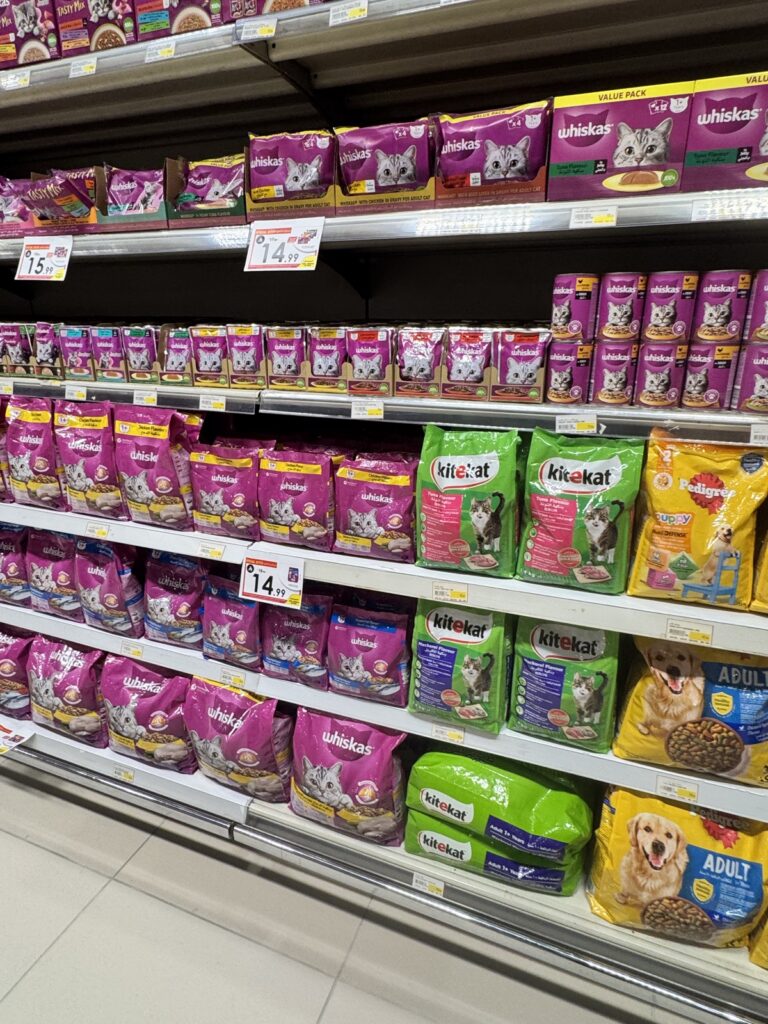
Global pet insurance reached $14.2B in 2025 and is projected to grow at a 12.8% CAGR to $46.8B by 2035 (Global Market Insights, 2025). Expansion is driven by rising veterinary costs, deepening pet humanization, and the opening of insurable markets beyond the mature US and UK.
About the pet insurance market
The pet insurance market is one of the fastest-compounding segments in pet care, and 2025 was a defining year. Global Market Insights sizes the category at $14.2B in 2025, on track for $46.8B by 2035 at a 12.8% compound annual growth rate. This article explains the size, the growth drivers, the regional leaders, and the competitive set—from Trupanion and Spot to the broader wave of deferred-care solutions.
How big is the pet insurance market in 2025?
Global pet insurance reached approximately $14.2B in 2025 (Global Market Insights, 2025). That figure spans accident-and-illness policies, accident-only policies, and wellness add-ons across dogs and cats. It is small relative to the ~$207B global pet-care market (Euromonitor, 2025) but growing several times faster than the overall category.
A 12.8% CAGR to $46.8B by 2035 implies the market roughly triples in a decade. For context, global pet food grows ~4.2% CAGR to 2034 (IMARC, 2025), so insurance is a disproportionate share gainer.
Is pet insurance underpenetrated?
Yes. Even in the US—among the most insured markets—only a low-teens percentage of pets carry policies, and in most countries penetration sits in the low single digits. That gap between spend and coverage is the core growth thesis.
What is driving 12.8% CAGR?
Three forces compound. First, vet cost inflation: advanced care (MRI, oncology, specialists) has pushed average claims higher, making insurance rational. Synchrony found that >50% of owners skipped needed vet care in the past year over cost (Synchrony / Encore Vet, 2025), a gap insurance directly addresses.
Second, pet humanization: 43.6% of owners prioritize pet-food health over their own (Pride and Groom, 2025), and that same mindset drives willingness to pay for medical coverage. Third, market expansion: insurable markets are widening beyond the US and UK into continental Europe, Asia, and Latin America as regulators formalize pet risk pools.
How does Korea show the model?
Korea recorded 3.49M animal registrations (Ken Research, 2025), a registry that enables precise risk pricing and insurance penetration—exactly the infrastructure new markets need. Registration-led markets tend to insure faster.
Which regions lead pet insurance?
North America and the UK are the most mature. The US benefits from a large owner base and brands like Trupanion ($1.44B revenue, 1.65M pets insured in 2025, Insurance Business Mag, 2025) and Spot (Inc. 5000 #233, +1,656% three-year growth, LinkedIn Spot, 2025). The UK has long had embedded pet coverage through retailers and breeders.
Continental Europe and Asia are earlier but accelerating, helped by registration systems and veterinary density. Sweden and the Nordics have historically high penetration, a template others are following.
Why is the US so important?
The US spent ~$158B on pets in 2025 (APPA, 2025), the world’s largest market, so even modest US penetration gains move the global number materially. US players’ scale also funds product innovation (e.g., telehealth bundling) that exports abroad.
Who are the key pet insurance competitors?
The field includes Trupanion, a vet-integrated medical insurer; Spot Pet Insurance, a fast-growing direct-to-consumer brand; plus Nationwide, Healthy Paws, Lemonade, and embedded offerings from retailers and fintechs. Trupanion’s 2025 results ($1.44B revenue, $19.4M net profit, Insurance Business Mag, 2025) show the category can reach profitability at scale.
Spot’s Inc. 5000 #233 ranking with +1,656% three-year growth (LinkedIn Spot, 2025) shows how much white space remains for aggressive customer acquisition. The contrast—Trupanion’s steady profitability vs Spot’s hyper-growth—illustrates two valid strategies.
Are insurers bundling telehealth?
Increasingly. Vet telehealth is a $20.5B market in 2025 growing 25.1% CAGR to $52.2B by 2029 (Global Market Insights, 2025). Insurers use tele-triage to deflect unnecessary claims and add member value, a structural tailwind for both categories.
What are the limits to growth?
Pre-existing-condition exclusions remain the category’s weakest link; most policies won’t cover chronic issues diagnosed before enrollment (owner forums / Quora pet-insurance threads, 2025). That pushes the “buy young” norm and caps mid-life conversion. Regulatory fragmentation across US states and countries also raises compliance cost.
Premium affordability during inflation is another check: if owners trim discretionary spend, insurance can be deprioritized despite its value.
How does deferred vet care connect?
Synchrony’s finding that >50% deferred vet care over cost (Synchrony / Encore Vet, 2025) is both the problem insurance solves and the risk it faces—owners who can’t afford care may also lapse coverage. Payment plans and embedded insurance at the vet clinic are the mitigants.
How do pet insurance policies actually work?
Most policies attach to a pet (usually enrolled while young) and reimburse a percentage of covered veterinary bills after a deductible, subject to annual or per-condition limits. Accident-and-illness plans cover emergencies and chronic disease; accident-only plans are cheaper but exclude illness; wellness add-ons cover routine care like vaccines.
Why does enrollment timing matter?
Because most insurers exclude pre-existing conditions diagnosed before the policy starts (owner forums / Quora pet-insurance threads, 2025), owners who wait until a pet is sick often find the condition uncovered. The industry norm is therefore “buy young,” which also lowers early-year premiums.
What is the 2025–2035 outlook?
Global Market Insights projects the category from $14.2B in 2025 to $46.8B by 2035 at 12.8% CAGR. The base case assumes steady penetration gains in the US and UK, accelerated adoption in continental Europe and Asia, and product innovation such as telehealth bundling (vet telehealth is $20.5B in 2025, 25.1% CAGR, Global Market Insights, 2025).
What could accelerate or slow it?
Accelerants include vet cost inflation (Synchrony: >50% deferred care over cost, Synchrony / Encore Vet, 2025) and registry-enabled markets like Korea’s 3.49M registrations (Ken Research, 2025). Slowdowns could come from regulatory fragmentation, premium affordability during inflation, or a coverage scandal that dents trust.
How should owners choose a plan?
Owners should compare reimbursement percentage, deductible, annual limits, and the pre-existing-condition policy—not just price. Vet-integrated options like Trupanion (1.65M pets insured, Insurance Business Mag, 2025) reduce claim friction, while DTC brands like Spot (Inc. 5000 #233, +1,656% growth, LinkedIn Spot, 2025) compete on acquisition and price.
Is pet insurance “worth it”?
Community verdicts (owner forums, Quora, 2025) say insurance offsets large emergencies but pre-existing exclusions bite; the consensus is to buy early and read the fine print. For high-cost breeds or households wanting budget certainty, the math often favors coverage.
How does pet insurance fit the broader pet economy?
Insurance is increasingly the connective tissue between food, veterinary care, and retail. Chewy’s clinic and membership push (18 clinics, Chewy+ at 3% of sales, LinkedIn Chewy, 2025) and Mars’ veterinary investments show platforms want the full “med-pharm-insurance” loop. As that loop formalizes, insurance becomes a default bundled product rather than a stand-alone purchase.
The bottom line for the category
Pet insurance is a rare pet segment compounding faster than food: $14.2B in 2025 toward $46.8B by 2035 at 12.8% CAGR (Global Market Insights, 2025). The growth is real but uneven—concentrated in markets where penetration is still low and vet costs are rising (Synchrony: >50% deferred care over cost, Synchrony / Encore Vet, 2025). The actionable takeaways: owners should enroll pets young to avoid pre-existing-condition exclusions (owner forums / Quora, 2025); compare reimbursement, deductible, and limits rather than headline price; and expect telehealth bundling (vet telehealth $20.5B, 25.1% CAGR, Global Market Insights, 2025) to become standard. For operators, the white space is acquisition and awareness, not product invention.
Related reading
- Trupanion Results 2025: $1.44B and Profitable
- Spot Pet Insurance Growth: +1,656% in 3 Years
- Vet Telehealth Market Size: $20.5B in 2025
FAQ
Q: How big is the pet insurance market in 2025?
A: Global pet insurance reached about $14.2B in 2025 and is forecast to hit $46.8B by 2035 at a 12.8% CAGR (Global Market Insights, 2025).
Q: Why is pet insurance growing so fast?
A: Rising vet costs, pet humanization (43.6% prioritize pet-food health over their own, Pride and Groom, 2025), and expansion into new regions drive ~12.8% CAGR.
Q: Which countries lead pet insurance?
A: The US and UK are most mature; the Nordics have high penetration. Korea’s 3.49M registrations (Ken Research, 2025) enable faster Asian adoption.
Q: Does pet insurance cover pre-existing conditions?
A: Generally no—most policies exclude conditions diagnosed before enrollment, which is why owners are advised to buy coverage while pets are young (owner forums / Quora, 2025).
Q: How does pet insurance relate to telehealth?
A: Insurers bundle tele-triage (vet telehealth is $20.5B in 2025, 25.1% CAGR, Global Market Insights, 2025) to reduce claims and add member value.
Sources
- Global Market Insights (2025): Pet insurance $14.2B in 2025, 12.8% CAGR to $46.8B by 2035.
- Euromonitor (2025): Global pet care ~$207B in 2025.
- IMARC (2025): Global pet food ~$136.6B in 2025, ~4.2% CAGR to 2034.
- Synchrony / Encore Vet (2025): >50% of owners skipped needed vet care over cost in the past year.
- Pride and Groom (2025): 43.6% of owners prioritize pet-food health over their own.
- Insurance Business Mag (2025): Trupanion 2025 revenue $1.44B, +12%, net profit $19.4M, 1.65M pets insured.
- LinkedIn Spot (2025): Spot ranked #233 on Inc. 5000 2025, +1,656% three-year growth.
- APPA (2025): US pet expenditure ~$158B in 2025.
- Ken Research (2025): Korea 3.49M animal registrations.
- Global Market Insights (2025): Vet telehealth $20.5B in 2025, 25.1% CAGR to $52.2B by 2029.
- owner forums / Quora (2025): Pre-existing-condition exclusions common across pet insurers.
