cat knocks things off counter — The mug hits the floor. Your cat watches, unbothered. It is tempting to call it malice — but feline behavior science is clear: cats do not knock things over to get back at you. They do it because they are wired to, and your reaction often makes it worse.
About the cat knocks things off counter
It’s Hunting Practice
In the wild, a small object that moves or wobbles might be prey. A cat’s paw is exquisitely tuned to test, bat, and topple things to judge what they are. A pen rolling off a desk triggers the same instinct as a mouse near a burrow. Your counter is simply the closest “prey field.” This is normal, healthy play behavior expressed in the wrong place.
The Attention Loop
If every knock earns a reaction — even “no!” — the cat learns the behavior is reliable entertainment. Cats are pragmatic: a boring owner who ignores them will be trained by a cat that creates engagement. The fix is to stop being interesting when objects fall, and to be very interesting during legal play.
Redirection, Not Punishment
- Clear the edges. Remove tempting items so the rehearsal stops.
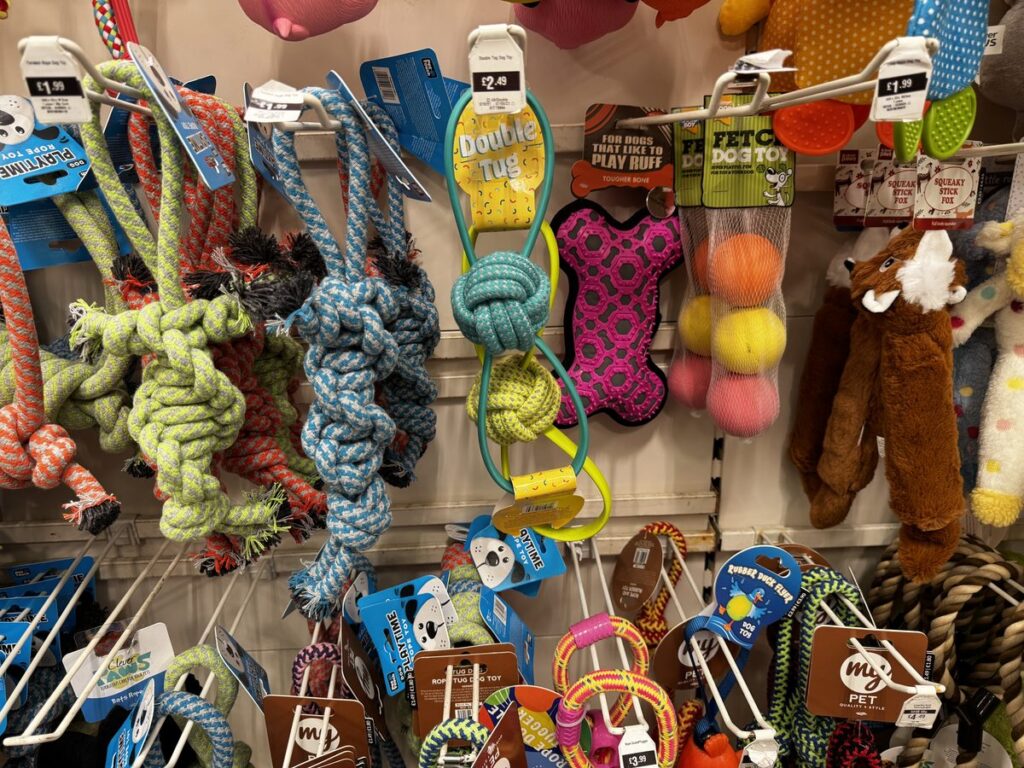
- Offer legal prey. battery toys, treat balls, and puzzle feeders satisfy the same drive safely.
- Reward four-on-the-floor. Treat the cat for sitting calmly near the counter.
- Ignore the knock. No eye contact, no words — break the attention loop.
- Enrich the hunt. daily play with a wand toy drains the predatory energy that ends on your counters.
An Enrichment Plan That Works
- Two short wand-toy sessions daily mimic the hunt-chase-catch-eat sequence.
- Rotate toys so novelty keeps interest high.
- Add vertical space (cat trees, shelves) — a confident, stimulated cat knocks fewer “prey” objects.
- Use feeding puzzles so mealtimes engage the brain.
Reframe it: a cat that bats at objects is healthy and playful. Your job is to move the game to acceptable targets, not to suppress a normal instinct.
When It Signals Stress
Sudden increases in counter sweeping, especially with other changes (hiding, not eating), can indicate anxiety or illness. A vet check rules out medical causes. Otherwise, lean on play: a tired hunter leaves your coffee mug alone. See more cat-care guides.
The Anatomy Behind the Bat
A cat forepaw is a marvel of sensory engineering. Packed with nerve endings and covered in sensitive pads, it can feel vibration, texture, and resistance through the smallest contact. Combined with whiskers that map space and motion, the paw naturally interrogates anything uncertain. When a lightweight object wobbles, the paw keeps testing it, and testing, to a cat, is a form of play that evolved to confirm whether something is prey. The topple is not the goal; the investigation is. Understanding this helps you redirect the instinct instead of fighting it.
Why counters, specifically?
Counters are the highest accessible vantage point in most rooms. Cats are territorial climbers that feel safest when they can survey their domain, and a clear counter top is an irresistible lookout. Objects left there become part of the landscape the cat manages. So the knock is partly exploration and partly the simple fact that the counter is the cat favorite real estate.
Play, Boredom, or Compulsion?
Most object-knocking is ordinary play, but it helps to tell the difference. Healthy play is intermittent, accompanied by a relaxed body and playful posture, and decreases with enrichment. A compulsive pattern looks different: repetitive knocking at the same spot, pacing, over-grooming, or doing it for hours regardless of attention. If the behavior seems driven, anxious, or is paired with hiding and appetite loss, that points to stress or illness rather than mischief, and a veterinary check is the right first step.
A Seven-Day Redirection Plan
Change happens faster with structure. Try this for one week:
- Day 1 to 2: clear all edges; introduce a wand-toy hunt session morning and evening.
- Day 3 to 4: add a treat ball or puzzle feeder so meal energy goes into legal objects.
- Day 5 to 6: reward four-paws-on-floor near the counter with high-value treats; ignore every knock.
- Day 7: assess. Most cats show clear reduction when the game has a better home.
Environmental Design That Discourages Knocking
- Create a better perch: a cat tree beside the counter gives a legal high lookout.
- Use texture deterrents: a strip of double-sided tape or a textured mat on the counter edge makes the surface less appealing, used only during training, then removed.
- Move temptations: keep mugs, pens, and breakables in cabinets or away from edges.
- Add vertical routes: wall shelves let the cat travel up high without using your counters as a highway.
Best Legal “Prey” Toys
| Toy type | Why it works | Use it |
|---|---|---|
| Wand toy | Mimics the hunt-chase-catch sequence | Two short sessions daily |
| Treat ball | Rewards batting in a safe target | During your busy hours |
| Puzzle feeder | Engages the brain at mealtimes | Replace one daily bowl |
| Battery mouse | Unpredictable movement satisfies the pounce | Supervised floor play |
Multi-Cat and Household Dynamics
In homes with more than one cat, knocking can become a competition: if one cat gets attention, even negative, for a knock, a housemate may copy it to claim the same spotlight. The cure is the same principle applied to everyone, reward calm, legal play uniformly, and never let the knock be the most interesting thing happening. Consistency across the whole household is what makes the habit fade.
Bottom line: your cat is not angry, not malicious, and not doing it on purpose. It is a hunter with energy to spend. Spend that energy on legal prey, and your counters stay clear.
For more on feline behavior and enrichment, explore our cat-care guides, and discover verified enrichment brands through membership.
Reading the Difference: Play Versus Attention-Seeking
Not every knock is the same. A hunt-driven knock comes with a playful, relaxed cat that bats, watches the object fall, and may even chase it. An attention-seeking knock comes with a glance at you first, a pause, then the bat, as if to say “watch this.” Both are solved by the same core move, remove the reward of your reaction, but attention-seekers need you to be especially boring, while hunters need more legal outlet. Telling them apart tells you where to spend your effort.
The glance that gives it away
If the cat makes eye contact with you right before the knock, the behavior is partly about you. Break that loop by being physically present but emotionally absent: keep your eyes on a book, say nothing, and never look at the counter. The knock stops paying in attention, and the cat redirects to something that does.
Clicker Training for Four-Paws-Down
A clicker marks the exact second the cat keeps all four paws on the floor near the counter, making the lesson crystal clear. Click and treat the calm moment; over sessions the cat learns that staying down, not batting, is what earns the good stuff. This precision is why marker training outperforms vague scolding, which the cat cannot map to a specific behavior.
Setting Up the Home for Success
- Give a better high spot: a cat tree at window height out-competes the counter for appeal.
- Put legal prey within reach: a toy on the floor near the kitchen keeps the hunt satisfied.
- Close off temptations: shut bathroom doors so a mug by the sink is not the next target.
- Rotate enrichment: new textures and sounds keep a bored cat interested in approved objects.
Myths That Make Knocking Worse
- Myth: the cat is angry at me. Cats do not plan revenge through object play; the act is instinct or learned attention, not emotion toward you.
- Myth: a loud noise will fix it. Startling may pause the act but often adds anxiety and can become part of the game.
- Myth: declawing stops it. Declawing is a major, painful surgery that does nothing for the underlying drive and is opposed by veterinary groups.
From Counter to Cat Tree: A Real Example
Picture a typical evening. The cat jumps to the counter, you ignore it and instead open a wand toy on the floor; the cat leaps down to chase. You reward the down with a treat. Over two weeks this sequence repeats, and the counter loses its charm while the wand toy gains it. The instinct is never suppressed, only moved to a target that keeps your mug intact and your cat fulfilled. For more on feline behavior, explore our cat-care guides, and find verified enrichment brands through membership.
Enrichment on a Budget
You do not need an expensive setup to satisfy the hunt. A crumpled paper ball, a cardboard box with holes, or a treats-in-a-towel roll all create legal prey. A ten-minute wand session costs nothing and drains more predatory energy than a pricey gadget left unused. Consistency of play matters far more than the cost of the toy.
Signs Your Plan Is Working
- The cat chooses the mat or tree instead of the counter.
- Knocks become brief and rare rather than constant.
- The cat settles after a play session instead of prowling edges.
- You can leave a safe object on the counter without it being batted.
These are the quiet wins that mean the instinct now has a healthy home.
When Knocking Starts After a Move
A new home unsettles a cat, and edge-batting can spike as the cat maps its territory and burns stress. Hold the routine: same play schedule, same legal toys, same boring response to knocks. The behavior usually settles as the cat regains confidence. If it persists or worsens with hiding and not eating, a vet check rules out illness behind the change.
Pairing Knocking With a Cue
You can even turn the instinct into a game with a start signal. Teach a word like “hunt” that means a legal toy session begins, and reserve it for times you can engage. The cat learns the fun happens on your terms and on approved targets, which makes unprompted counter batting less satisfying. A clear cue also helps multi-cat homes, where one cat signal can involve the whole group in structured play instead of chaos.
Long-Term Outlook
Most cats reduce counter knocking dramatically within a few weeks of consistent redirection, and many stop entirely once the habit is replaced. The goal is not a cat that never plays, but a cat that plays where you both win. Keep the legal outlets fresh, keep your response to knocks boring, and the instinct that once threatened your coffee mug becomes the same energy that makes your cat a joyful, healthy hunter at home. For deeper feline behavior help, our cat-care guides and verified brands through membership are here to support you.
Keep Learning with GlobalPetIndex
GlobalPetIndex is the global pet industry directory and intelligence platform. Explore our Knowledge library for veterinary-reviewed pet-care guides, or become a member to unlock verified company, brand, and supplier contacts used by pet professionals worldwide.
