An evidence-led market report for GlobalPetIndex (GPI).
Research cut-off: 5 October 2026.
The UK has a large pet-owning population and an established network of pet retailers, manufacturers, distributors and specialist suppliers. But the available headline figures do not add up to one reliable measure of the whole Pet Market.
The clearest public market-value data reviewed for this report covers pet food, not the full pet-care economy. Estimates of the UK’s dog and cat populations also differ materially between survey providers. PATS 2026 offers a useful view of products and trade activity, but its attendance and exhibitor figures answer different questions. They are not measures of consumer demand.
For companies assessing the UK market, the practical task is to narrow the question: which product, for which pet owner, through which retail or distribution channel, at what price, and under what regulatory conditions?
The figures at a glance
- UK pet population: UK Pet Food’s 2026 estimate is 36.5 million pets, with 62% of households owning at least one pet. Its estimates include 15.5 million dogs and 13 million cats. These are survey-based estimates, not census counts. [8]
- A different population estimate: PDSA’s 2025 report estimated 11.1 million dogs, 10.5 million cats and 700,000 rabbits. Its method and survey population differ from UK Pet Food’s, so the figures should not be combined into a year-on-year trend. [9][10]
- Pet food market value: UK Pet Food’s 2026 public summary reports approximately £3.9 billion excluding wild-bird and pigeon food, and around £4.3 billion when those categories are included. These figures refer to pet food, not the entire pet-care market. [11]
- PATS 2026: The show took place at NEC Birmingham from 27 to 29 September. Before the event, the organiser cited more than 425 exhibitors and over 600 brands. After the show, trade media reported 6,505 visitors, up 8% from the 6,021 reported for 2025. [1][2][4][5]
These are not interchangeable measures. Some are pre-show organiser figures, some are post-show media reports, and others are estimates from annual surveys. Each needs to be read in its own context.
How to read the evidence
This report draws on government guidance, industry-association data, PATS organiser material, post-show trade coverage and a sample of user-supplied show photographs. Each source has limits.
An organiser’s pre-show estimate describes what the event expected to deliver. A post-show attendance figure describes reported event visits; without a published counting methodology, it does not establish the number of unique buyers, qualified leads or orders. A pet-population estimate describes the result of a survey and calculation, not a count of every animal. Photographs can show what was visible at a stand, but cannot establish sales, market share or brand performance.
Several data points needed for a complete market model were not available in comparable public sources reviewed for this report: a unified value for the entire UK pet-care economy, consistent channel shares, like-for-like growth rates by product category, and a verified post-show count of PATS 2026 exhibitors. The PATS Red Book’s Issuu listing confirms the guide’s title and publication date, but the full exhibitor directory could not be extracted from that page for this report. [19]
Where those gaps matter, the report leaves them open rather than filling them with estimates from search snippets or non-comparable commercial sources.
Pet ownership: a substantial base, with differing estimates
UK Pet Food’s 2026 page estimates that 62% of UK households own a pet, with a total pet population of about 36.5 million. It estimates 15.5 million dogs, with 41% of households owning a dog, and 13 million cats, with 31% of households owning a cat. The estimates are based on online interviews conducted in January 2026 with 8,951 respondents by Kantar / Soulor Consulting. The association says the calculation combines reported pet ownership with household numbers from the Office for National Statistics (ONS) and an estimate of the average number of each species per household. Published figures are rounded. [8]
PDSA’s 2025 PAW Mini Report estimates 11.1 million pet dogs, 10.5 million pet cats and 700,000 pet rabbits in the UK. Its owner survey included 5,387 adults aged 18 or over who owned a dog, cat or rabbit. Fieldwork ran online from 17 December 2024 to 12 January 2025. For population estimates, PDSA also used a separate YouGov survey of 10,000 UK adults, the number of pets reported by owners and ONS household data. The PAW owner sample covers dog, cat and rabbit owners; it is not a survey of owners of every pet species. [9][10]
The difference between the two sources is material. UK Pet Food’s 2026 estimate for dogs is 15.5 million; PDSA’s 2025 estimate is 11.1 million. For cats, the corresponding figures are 13 million and 10.5 million.
It would be misleading to describe the gap as population growth between 2025 and 2026. The surveys use different sampling frames, questions and calculations. The estimates are better treated as separate indicators, each cited with its source and year.
For a pet brand or distributor, population figures help describe the potential breadth of demand. They do not establish the addressable market for a particular SKU. The number of dogs in the country, for example, does not show how many owners buy a particular food format, at what price, through which channel or how often. A working sales estimate needs those variables.
Market value: pet food is not the whole pet-care economy
UK Pet Food’s market-data page says the association collects annual data from members and analyses pet-food formats by species, volume and value. Its 2026 public summary, drawing on Kantar / Soulor Consulting, gives two market values:
- Around £3.9 billion for pet food including indoor-bird food but excluding wild-bird and pigeon food.
- Around £4.3 billion when wild-bird and pigeon food are included.
The page also reports a 4% increase in value and a 1% decline in volume for the market excluding wild-bird and pigeon food. UK Pet Food says participating members represent around 90% of the UK pet-food market. [11]
Those figures are useful within their stated scope. They should not be presented as the value of the whole UK pet-care industry. Toys, leads, cat litter, beds, grooming, boarding, insurance and veterinary services are not automatically included. Nor does the public summary provide all the detail needed to establish the exact reference period, price treatment or category-level changes.
A rise in nominal market value alongside a small fall in volume could be consistent with changes in price or product mix. The public summary alone does not show which explanation applies. It does not establish that owners are trading up, choosing smaller packs or moving into premium food. Those questions require price, volume and category data broken down by format, species, channel and period.
“UK pet market size” is therefore not a single, self-explanatory metric. Different reports may refer to manufacturing value, retail sales, online sales or broader pet-care spending. Their boundaries need to be aligned before figures are compared.
Pet retail and distribution: start with the channel, not a market-share claim
UK pet products reach buyers through several routes: specialist pet retail, grocery and general merchandise retailers, online marketplaces, brand-owned e-commerce, independent shops, wholesalers, distributors and veterinary-related channels. The right route depends on the product and the buyer.
Comparable, free public data on UK channel shares was not available in the sources reviewed. This report therefore does not assign percentages to online or offline pet retail, rank retailers by market share, or state a channel growth rate.
PATS provides a view of the trade supply side. Its programme covers pet products, pet food, aquatics, reptiles and exotics, with areas including the New Starter Zone, Aquatics & Reptiles Zone and Grooming Zone. For 2026, the organiser introduced an International Pavilion and a Hosted Buyer Programme. Those features show how the event was designed to serve established buyers, new brands and specialist categories; they do not measure the share of each category in UK retail. [1][2][6]
The organiser’s pre-show guide selected ten brands: Cloud7, Scamp & Paw, BullyBillows, Ferplast, flexi, Rosewood Pet Products, Hunter Pet, Petloc8, RIO and HayDay. Their products included dog clothing and beds, pet food, leads and accessories, bird products, GPS trackers, licensed toys and small-animal hay. This was an editorial selection of brands to visit, not a representative survey or a ranking by sales. [7]
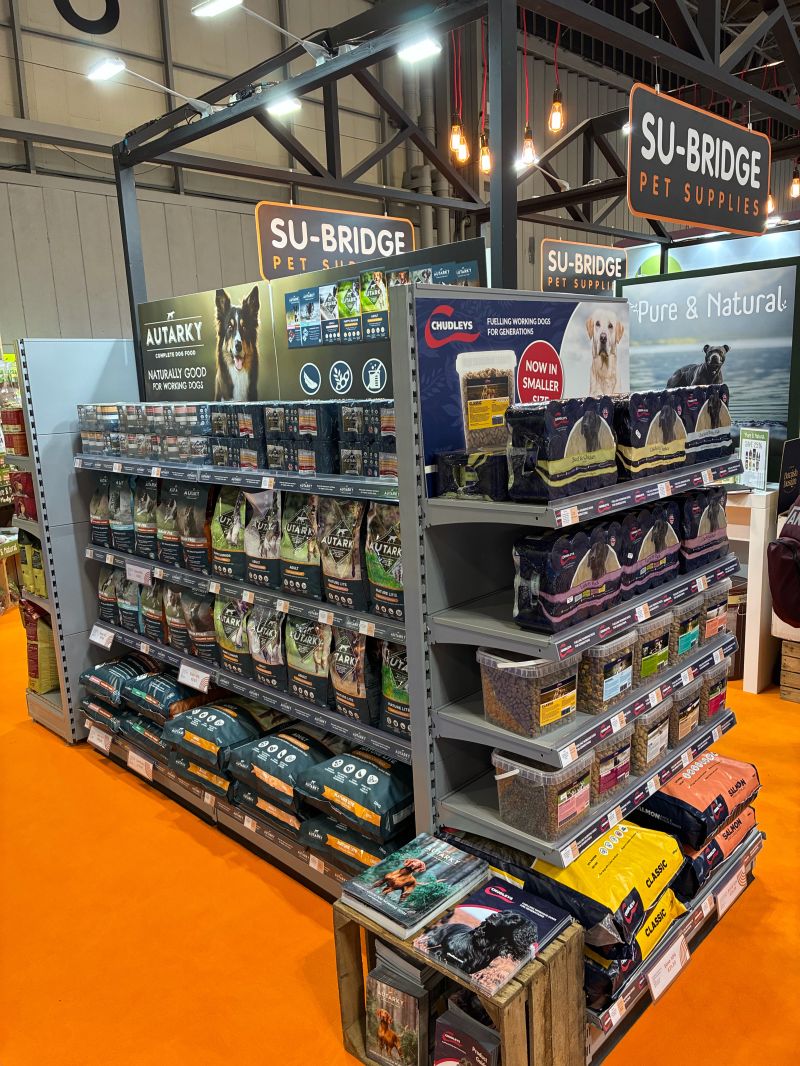
The SU-BRIDGE PET SUPPLIES stand at PATS 2026.
The channel questions for a pet manufacturer or pet brand are more specific:
- What does the retailer require for supplier approval?
- Is there room for the product within its existing range?
- Can the proposed retail price support the wholesale terms and promotions?
- What packaging, barcode and case-size requirements apply?
- Who carries the cost of returns, short-dated stock or product damage?
- Can the supplier maintain availability and provide after-sales support?
For a food product or goods containing animal-origin material, import eligibility and documentation belong in the same conversation. A buyer may like the product and still decline to proceed if supply, certification or labelling is unclear.
A useful channel study compares the same product category across different routes. Specialist pet retail may offer category knowledge and a more focused customer base, but its requirements need to be confirmed with buyers. Grocery and general retail may have different expectations around price, turnover and continuity of supply. Online marketplaces offer product visibility, but a brand needs to account for customer acquisition, platform costs, fulfilment, returns and review management. Direct-to-consumer gives the company more control over product education and customer relationships; it does not remove the need to build traffic, trust and repeat purchase.
These are evaluation criteria, not a ranking of channel profitability. A company should test them against actual buyer interviews, quotations and trial orders rather than importing a channel-share figure from a differently defined market report.
Competitive sets also need to be built around the customer’s use case. A dog treat may compete with products from other brands, different pack formats or another type of reward. For grooming products, aquatics equipment or walking accessories, the alternatives are different. For each target SKU, a market review can record intended use, materials or formulation, pack size, displayed price, claims, channel and date observed. A web-listed price is not necessarily a realised transaction price; a sampled shelf is not a national market share.
PATS 2026: useful trade evidence, not a consumer-market census
PATS 2026 ran from 27 to 29 September at NEC Birmingham, in Halls 3 and 3A. Before the show, the organiser cited more than 425 exhibitors and over 600 brands. The official Red Book announcement referred to a full exhibitor listing, more than 200 show offers and over 450 new products planned for launch. These were pre-show figures and descriptions, not a verified post-show count. [1][2]
After the event, Pet Product Marketing reported 6,505 visitors, compared with 6,021 in 2025, an 8% increase. The article also reported more than 600 brands and 20% more floor space than the previous year. Those are post-show figures reported by trade media. No public audit methodology or breakdown of unique visitors, purchasing authority, orders or post-show conversion was located for this report. The visitor number should not be used as a proxy for those measures. [4]
The year-on-year comparison needs similar care. PATS’s 2025 post-show release reported 6,021 visitors, 445 exhibitors from 15 countries and 317 overseas visitors. The “425+ exhibitors” figure for 2026 was announced before the event. Because the figures refer to different stages of reporting and are worded differently, they do not establish that the 2026 show had fewer exhibitors. [2][5]
PATS also ran alongside BETA International in an adjoining hall. The 2026 PATS material said BETA took place on 27 and 28 September in Hall 2. Co-location gave visitors access to two trade events during one trip; it does not, by itself, demonstrate overlap between their buying audiences or cross-category sales. [2]
The Hosted Buyer Programme
The organiser’s Hosted Buyer Programme was designed for senior buyers with direct purchasing authority, including multi-site retailers with three or more stores and large online retailers. Selected buyers were expected to attend all three show days and book at least five meetings per day with exhibiting brands. [6]
The post-show trade report named buyers from Fressnapf in Germany, Chewy in the United States and Pet’s Delight in Dubai. These examples establish that international buyers were reported as participants. They do not show how many meetings converted to orders. [4]
For Pet Brands, the programme’s commercial value depends on the quality of the meetings and follow-up. Before the event, suppliers can identify suitable buyers, prepare pricing and samples, and make sure product and compliance documents are ready. Afterward, a contact should be tracked through distinct stages—sample request, documentation review, quotation, trial order and repeat business. A badge scan or an initial expression of interest is not a purchase order.
New-product awards: a view of products selected for judging
PATS said more than 400 products were entered into its 2026 New Product Showcase. Retail judges assessed entries on innovation, design, quality, packaging, value for money and sustainability. Judging took place on 27 September. [3]
The award categories covered cat accessories and food; dog food, treats, accessories, harnesses and clothing; small-animal and bird products; pet care; grooming; indoor and outdoor aquatics; and reptiles. The winners included:
| Category | Product | Company / brand | Stand |
|---|---|---|---|
| Cat Accessories & Toys | Pet Tee Pee | Danish Design | L20 |
| Cat Food Products | Purrform Fresh Deli | The Nutriment Company | E40 |
| Dog Food Products | Real Simple | Naturaw | K50 |
| Dog Treat Products | Pure & Natural Doggy Bag (Natural Chew Variety Pack) | Su Bridge | I10 |
| Dog Accessories & Toys | Booster Enrichment Toy Range | Fidelis Dog | E32 |
| Dog Harnesses, Leads & Dog Wear | Truelove Ultra-light Magnetic Top Harness | Truelove x That Dog | F58 |
| Small Animal & Bird Products | Teewy Meadow Wheel for Small Animals | Chongqing Pet Union Biological Technology | N54 |
| Pet Care Products | Oralade Active + | Oralade | B13 |
| Grooming Products | Portable Dog Washer | Hound Hose | A74 |
| Aquatics Indoor Products | Interpet Scape Kit Cube Aquariums | Sera Group | T30 |
| Aquatics Outdoor Products | Pond in a Pot | Anglo Aquatic Plant | R3 |
| Reptile Products | Fast Acting Reptile Calming & Emotional Wellbeing Kit | Pet Remedy | L18 |
The judges’ comments addressed product-level issues, including price, labelling, ease of use, portability, durability and pack or product format. That makes the awards a source of research leads. It does not make them a consumer-preference survey, a sales ranking or clinical evidence for product claims. [3]

Burgess Pet Care and Burgess Excel display at PATS 2026.
For Pet Manufacturers developing a UK range, the award list can help frame buyer questions: Does the product solve a clear use problem? Is the proposition easy to explain on a shelf or product page? Is the pack size suited to the intended retail channel? Can the brand substantiate claims about health, materials or sustainability? These are questions to test with buyers and consumers, not conclusions established by the awards.
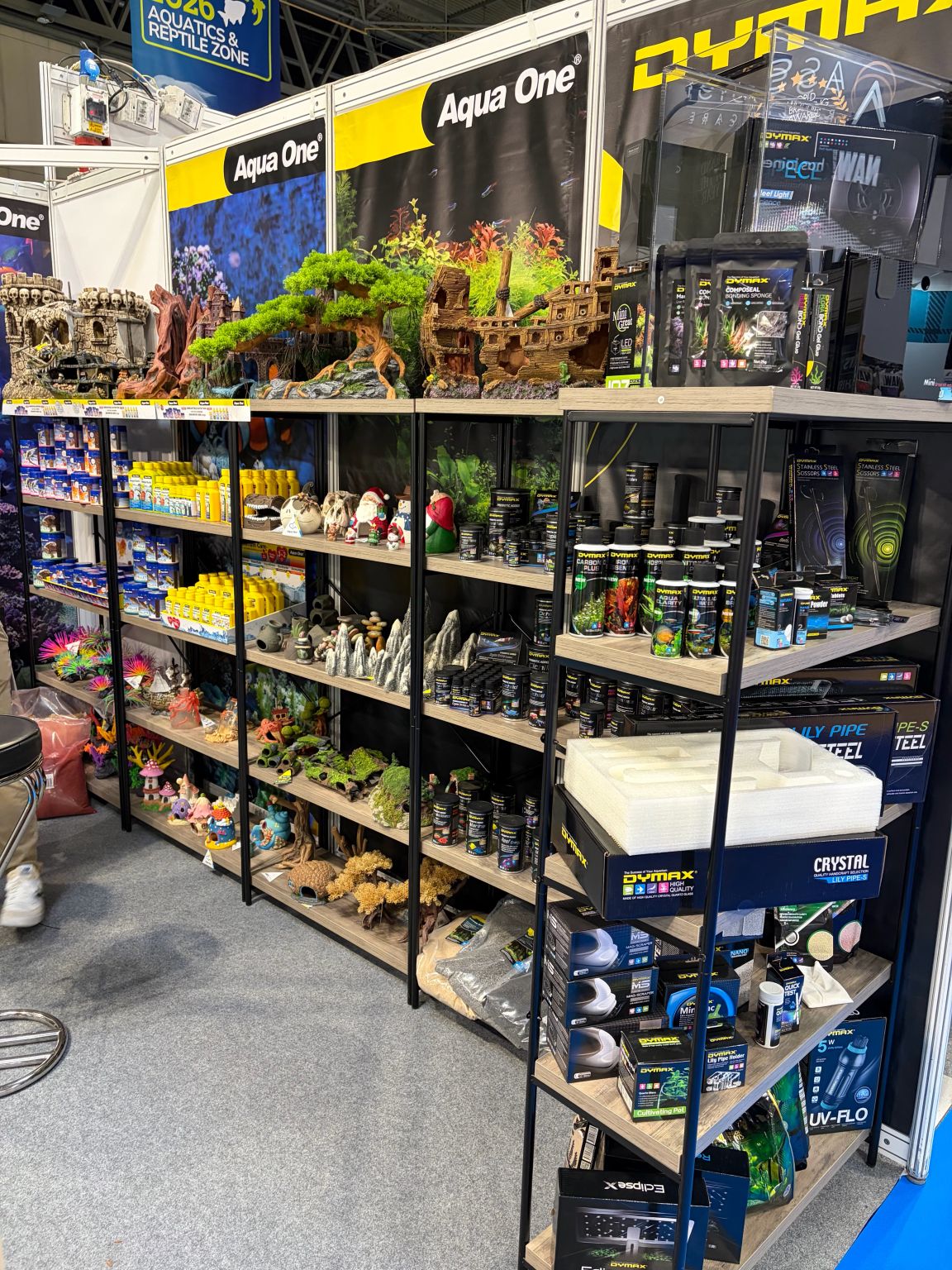
Aqua One display photographed at PATS 2026.
Regulation and market access
Pet-food labelling and product claims
GOV.UK guidance says pet-food manufacturers may declare ingredients using specified categories. Additional information—such as analytical declarations or manufacturer details—must be objective, quantifiable and capable of proof. It must not mislead purchasers or make medicinal claims that are not permitted. [12]
Product packaging is only one part of the claim environment. A product page, social post, show handout or distributor’s sales sheet can create the same issue as a label if it makes an unsupported claim. Brands should review these materials together.
Feed businesses and safety responsibilities
UK animal-feed legislation covers activities from production and processing through storage, transport, distribution and placing feed on the market. The GOV.UK guidance lists rules covering feed safety, traceability, hygiene, labelling, additives and official controls. Many businesses involved in the use, manufacture or marketing of feed need to be registered or approved by the relevant authority. The guidance notes an exemption for some pet-food retail activity; that should not be treated as a general exemption for manufacturing, importing or wholesale operations. [13]
Importing pet food containing animal-origin material
Products containing animal-origin material may fall under animal by-products (ABP) rules. Importers need to identify the correct commodity category and check whether the country of origin and establishment are approved, whether a health certificate is required, what risk category applies, and whether pre-notification and border checks are needed.
GOV.UK’s general ABP note says importers must check the current commodity-specific Import Information Note (IIN). It describes IPAFFS notification and the role of approved Border Control Posts. The note says notification is generally required at least one working day before arrival, subject to the stated rules and conditions. [14]
The ABP/3B note applies to processed pet food other than canned pet food. It sets requirements for production and storage, new packaging, eligible origins and approved establishments, sampling and health certification where applicable. Canned pet food and raw pet food should not be assumed to follow the same rules as non-canned processed food. Import conditions can change, so the current commodity-specific guidance should be checked before shipment. [14][15]
The rules also differ by territory and movement. Some GOV.UK guidance applies to England, Northern Ireland and Wales; Scotland has parallel domestic rules. Imports into Great Britain and movements to or from Northern Ireland should not be treated as one process. [12][13][14]
Advertising, comparative claims and environmental statements
ASA/CAP guidance on pet-food advertising applies to non-broadcast advertising. It says ads must not mislead and objective claims need suitable evidence. Where an ad compares an identifiable competitor, the comparison must not mislead, must involve products meeting the same needs or intended for the same purpose, and must compare material, relevant, verifiable and representative features. [16]
Health-related statements need particular care. ASA/CAP says advertisers should hold robust evidence for health-benefit claims. A product that is not a licensed veterinary medicine must not be presented as treating a disease; evidence alone does not make an unlicensed medicinal claim acceptable. [16][17]
Environmental claims also need a clear basis and appropriate scope. Broad statements such as “better for the planet” can be problematic if they do not explain what is being compared or omit relevant parts of a product’s life cycle. The claim and the evidence need to match. [16][18]
For pet brands and distributors, a practical control is to maintain a record of each product claim, the evidence supporting it, the markets where it can be used and the person responsible for approval. That record should cover packaging, e-commerce, social media, trade-show material and reseller content.
From a PATS meeting to a first UK order
A market-entry plan is more useful when it starts with one product and one channel rather than a broad claim about the whole UK pet market.
Define the product opportunity. Specify the pet species, use case, product category, target retail price, likely alternatives and relevant regulatory route. Separate pet food, treats, accessories, aquatics and services. For food and products containing animal-origin material, check import feasibility early; it can affect cost, supply-chain design and timing. [11][12][14][15]
Prepare a buyer-ready product pack. Depending on the category, this may include an English specification sheet, ingredients or materials, label artwork, barcode, pack dimensions, recommended retail and wholesale prices, minimum order quantity, shelf life, supply capacity, transport conditions, test documents and evidence for product claims. The requirements should be confirmed with the intended UK importer or retailer; one checklist will not fit every product. [12][13][16][17]
Use trade-show meetings to test buying requirements. PATS’s Hosted Buyer Programme sets out a formal meeting structure for eligible senior buyers. Brands should use meetings to ask about assortment gaps, supplier approval, trial volumes, promotional calendars and the evidence required for listing. Follow up with named owners and specific next steps. [6]
Test fulfilment before widening distribution. A small trial can reveal whether the price, packaging, delivery and after-sales model works in practice. Track order conversion, damage and returns, logistics costs, customer-service issues and replenishment. Food businesses may also need to monitor shelf life, batch traceability, storage and import timing. A busy stand or an award does not answer those operational questions.
Review market claims before publication. Maintain a consistent review process for objective product claims, comparisons, health statements and environmental language. Link each claim to its supporting documents and permitted use. ASA/CAP’s published work on pet-food ads shows that compliance is not merely a packaging task; it applies to marketing communications too. [16][17]
These are commercial steps based on the public event and regulatory material cited here. They are not a guaranteed route to a listing or sales result.
Risks and gaps to keep visible
Population estimates are not directly comparable. UK Pet Food and PDSA report materially different dog and cat estimates. A market model should retain each source and its method rather than present the difference as annual growth. [8][9][10]
The pet-food value is not a whole-industry total. The £3.9 billion and £4.3 billion figures have different category scopes. The public summary does not supply enough detail to reconstruct every underlying period or segment. [11]
PATS attendance and exhibitor figures have different reporting bases. The 6,505 attendance figure is from post-show trade coverage. The 425+ exhibitors and 600+ brands were pre-show organiser figures. No comparable public data reviewed here establishes unique buyer numbers, order value or conversion after the show. [2][4]
Awards and photographs are selective evidence. Awards cover products entered into a showcase; the organiser’s brand guide is an editorial selection; photographs capture a limited number of stands. None represents the full market or annual sales. [3][7][20]
Regulatory requirements depend on the product and destination. Treating general guidance as a commodity-specific import approval, or applying processed-food requirements to raw pet food, can create delays or other problems. Check current rules and obtain case-specific advice before shipment. [12][13][14][15][16][17]
Buyer interest is not a listing. An initial conversation does not confirm supplier approval, pricing, product compliance, first order or repeat purchase. Local distribution, warehousing, returns and customer support all affect the commercial case.
What the evidence supports
The available data supports a clear but narrower picture of the UK Pet Market: a sizeable pet-owning base; a separately measurable pet-food sector; a trade event that brings together brands, retailers and specialist suppliers; and regulatory requirements that affect products from development through sale.
It does not support a single, comparable figure for the whole pet-care economy, a reliable public breakdown of every retail channel, or a forecast of PATS-derived sales. Those gaps matter to companies evaluating pet retail, pet technology, food, accessories or distribution opportunities.
For a Pet Manufacturer or brand considering the UK, the next step is product-specific: identify the buyer, confirm the route to market, check the current import and labelling rules, and test the offer with real quotations and a controlled trial. For market researchers, the priority is to keep the source, date and definition attached to every number. That is what will make later comparisons useful.
Appendix A: Brands identifiable in the supplied PATS photographs
The following names were legible in a sample of user-provided show photographs. This is not a complete exhibitor list and does not verify company registration, ownership, distribution rights or commercial performance. [20]
- SU-BRIDGE PET SUPPLIES
- Donald Cooke Ltd
- K9 CHEW CO.
- Burgess Pet Care
- Burgess Excel
- happypet.
- Natural VetCare
- In Vogue Pets
- Petdig Wholesale
- PSH Cosmetics / PSH Pet Skin Healthcare
- Werner Tiernahrung GmbH & Co. KG
- Harringtons
- Pet Industry Federation (PIF)
- YAKERS
- PET MUNCHIES
- The Dog House
- The Pawfume Shop
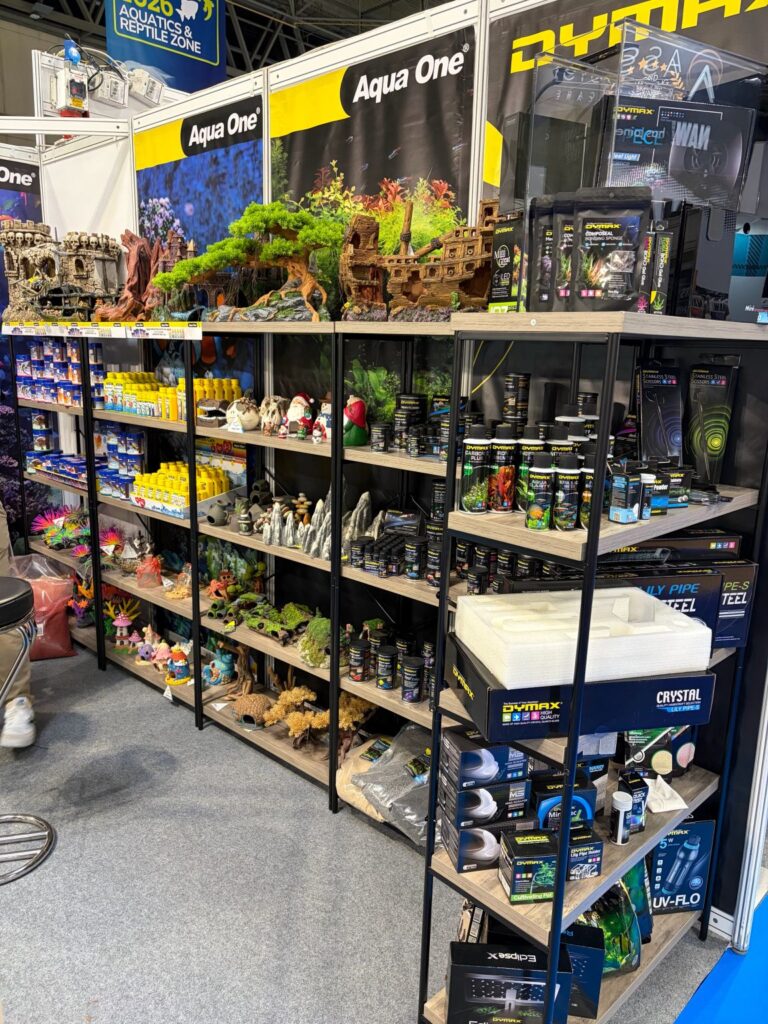
- Aqua One
Some other signs in the photographs were obscured or unclear and have been left out. The images can help identify names for follow-up checks; they do not establish sales, consumer awareness, market share or product efficacy.
Appendix B: PATS 2026 New Product Award winners
| Category | Product | Company / brand | Stand |
|---|---|---|---|
| Cat Accessories & Toys | Pet Tee Pee | Danish Design | L20 |
| Cat Food Products | Purrform Fresh Deli | The Nutriment Company | E40 |
| Dog Food Products | Real Simple | Naturaw | K50 |
| Dog Treat Products | Pure & Natural Doggy Bag (Natural Chew Variety Pack) | Su Bridge | I10 |
| Dog Accessories & Toys | Booster Enrichment Toy Range | Fidelis Dog | E32 |
| Dog Harnesses, Leads & Dog Wear | Truelove Ultra-light Magnetic Top Harness | Truelove x That Dog | F58 |
| Small Animal & Bird Products | Teewy Meadow Wheel for Small Animals | Chongqing Pet Union Biological Technology | N54 |
| Pet Care Products | Oralade Active + | Oralade | B13 |
| Grooming Products | Portable Dog Washer | Hound Hose | A74 |
| Aquatics Indoor Products | Interpet Scape Kit Cube Aquariums | Sera Group | T30 |
| Aquatics Outdoor Products | Pond in a Pot | Anglo Aquatic Plant | R3 |
| Reptile Products | Fast Acting Reptile Calming & Emotional Wellbeing Kit | Pet Remedy | L18 |
The source is PATS’s award announcement, published on 29 September 2026. The awards record judging outcomes; they are not sales or market-share data. [3]
Sources
[1] PATS, “Pet & Aquatics Trade Show (PATS) 2026 Returns to NEC Birmingham,” pre-show announcement, September 2026. patshow.co.uk
[2] PATS, “PATS Red Book showcases exclusive offers and new products,” 18 September 2026. patshow.co.uk
[3] PATS, “PATS 2026 New Product Awards revealed,” 29 September 2026. patshow.co.uk
[4] Pet Product Marketing, “PATS 2026 attendance rises 8% to record 6,505,” October 2026. petproductmarketing.co.uk
[5] PATS, “Record-breaking PATS 2025 smashes attendance record,” 3 October 2025. patshow.co.uk
[6] PATS, “Hosted Buyer Programme,” 2026 programme information. patshow.co.uk
[7] PATS, “10 brands you must see at PATS 2026,” 22 September 2026. patshow.co.uk
[8] UK Pet Food, “UK Pet Population,” 2026 estimates and methodology. ukpetfood.org
[9] PDSA, “UK pet populations of dogs, cats and rabbits,” PAW Mini Report 2025 estimates. pdsa.org.uk
[10] PDSA, “The Methodology behind the PAW Report,” 2025 sample and population-estimation methods. pdsa.org.uk
[11] UK Pet Food, “UK Market data,” public summary of the 2026 market report and category scope. ukpetfood.org
[12] GOV.UK, “Pet food,” guidance on labelling, domestic production, animal by-products and marketing. gov.uk
[13] GOV.UK, “Animal feed legislation,” updated 25 June 2026. gov.uk
[14] GOV.UK, “General information for imports of animal by-products (IIN GEN/3),” published 2 December 2024; check the latest version before importing. gov.uk
[15] GOV.UK, “Processed pet food other than canned pet food (IIN ABP/3B),” updated 25 April 2025. gov.uk
[16] ASA/CAP, “Animals: Pet food,” updated 16 April 2026. asa.org.uk
[17] ASA/CAP, “Keeping pet food claims on a tight lead,” 18 December 2025. asa.org.uk
[18] GOV.UK / Competition and Markets Authority, “Environmental claims on goods and services / Green Claims Code.” gov.uk
[19] Garden Trade News, PATS Red Book 2026, Issuu listing. The publication page was visible, but the full exhibitor directory was not extracted for this report. issuu.com
[20] User-supplied photographs from PATS 2026. The report uses a sample of images to record legible stand or brand names; the images are not treated as a complete exhibitor directory or evidence of commercial performance.
