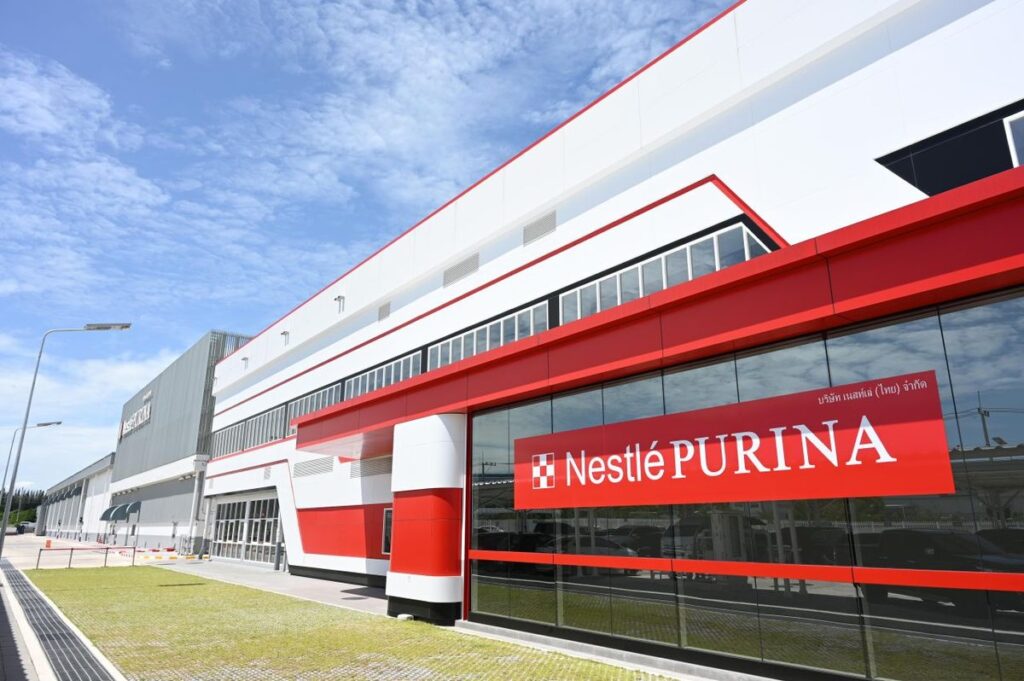
Nestlé Purina Wins Thailand BOI Approval for THB 6.4B (~$194M) Pet Food and Treat Manufacturing Expansion at Amata City Rayong
Key Facts
- Total investment
- More than THB 6.4 billion (~$194M); pet food THB 4.5B + pet treats THB 1.93B.
- Location
- Amata City Rayong Industrial Estate, Thailand.
- Export orientation
- More than 90% of output to US, Canada, Japan, Australia, New Zealand.
- Brands
- Felix, Friskies, Pro Plan, Purina One.
- Local sourcing
- Pet food project ~56% Thai inputs; treats project ~88% (chicken, sugar, tapioca starch).
- Domestic raw-material spend
- More than THB 450M per year.
- Strategic context
- Thailand is the world’s #2 pet food exporter (after Germany); 2025 exports $3.28B, +8.15% YoY.
What Happened
Thailand’s Board of Investment (BOI) approved two new projects from Nestlé (Thai) at Amata City Rayong Industrial Estate: a pet food manufacturing line worth THB 4.5 billion (approximately $140 million) and a pet treats facility worth THB 1.93 billion (approximately $60 million). Combined, the two projects represent more than THB 6.4 billion (CHF 157 million, approximately $194 million) in new capital deployment and are designed to extend Nestlé Purina’s manufacturing footprint in Southeast Asia.
Background
Thailand has been Nestlé’s preferred Asian pet food hub for more than two decades, anchored by the existing Purina plant at Amata City Chonburi. The new approvals deepen that footprint at a time when Nestlé is reorganizing its global pet care supply chain around three export-grade hubs: Batavia, Ohio (United States, $550M greenfield opened August 2026); Mantova, Italy (CHF 520M upgrade); and Amata City Rayong, Thailand. Pet care now accounts for roughly 21% of Nestlé group sales, and the Thailand expansion is one of several concrete manifestations of management’s stated intent to make pet care Nestlé’s fourth global core category alongside coffee, confectionery, and dairy.
Industry Context
Thailand is the world’s second-largest pet food exporter after Germany, with 2025 export value of approximately $3.28 billion (up 8.15% year on year) and roughly 10.2% of global export share. The country’s competitive position rests on three structural advantages: deep chicken and seafood supply chains, FTAs covering ASEAN, Australia, New Zealand, Japan, and (partial) EU/GSP access, and a mature base of food-grade processing infrastructure. Within that environment, Nestlé is consolidating scale rather than spreading thin across multiple sites.
Market & Business Impact
Two B2B implications follow. First, Thai poultry, seafood, sugar, and tapioca suppliers can expect a multi-year ramp of contracted volume: more than THB 450 million per year in domestic raw materials is a sizeable anchor order book for Thai primary processors. Second, ASEAN and Australasian importers gain a more secure supply of Felix, Friskies, Pro Plan, and Purina One, but they also face a step-up in competitive intensity as Nestlé consolidates scale. For regional OEMs and private-label suppliers, the bar is now export-grade certification (HACCP, BRC, FSSC 22000, AAFCO) and price discipline. For any pet products factory in ASEAN that wants to be a credible pet food manufacturer for global buyers, the Thailand BOI approval is a reminder that scale, certification, and FTA-friendly geography now matter more than ever. Existing pet food wholesale supplier networks and pet products supplier channels that already serve the US, Canadian, and Japanese markets should expect larger and more frequent RFQs from retailers and brand owners in 2027 as Nestlé and its competitors pull more volume through Thailand. Independent pet wholesale supplier operators that ride the same premium-grade narrative should also see a step-up in inbound from buyers.
Companies & Brands Involved
- Nestlé Purina — Global pet food division of Nestlé S.A.
- Felix — Nestlé Purina wet cat food brand.
- Friskies — Nestlé Purina mainstream pet food brand.
- Pro Plan — Nestlé Purina super-premium brand.
- Purina One — Nestlé Purina mainstream premium brand.
- Thailand Board of Investment (BOI) — Investment promotion agency.
Data & Evidence
- Investment split: pet food THB 4.5B + pet treats THB 1.93B = THB 6.43B total.
- USD conversion: ~$194M (CHF 157M official Nestlé disclosure).
- Local input ratio: 56% (pet food), 88% (treats).
- Export orientation: more than 90% of total output.
- Thailand pet food exports 2025: $3.28B, +8.15% YoY, ~10.2% global share.
- Nestlé pet care share of group sales: ~21%.
What This Means
The Thailand expansion is part of a coordinated hub strategy that also includes Batavia (Ohio) and Mantova (Italy). B2B suppliers should read the announcement as a signal that Nestlé intends to lock in three regional export-grade manufacturing bases for the next decade. The opportunity is concentrated in Thailand for poultry, seafood, sugar, and tapioca; the risk is concentrated in any country or supplier that gets displaced from Nestlé’s preferred-supplier list as scale concentrates. Co-manufacturers in Asia who want to win the next wave of Nestlé outsource work should be planning for export-grade certification now. Industry observers writing their 2026 pet industry report 2026 chapters and tracking pet industry trends 2026 should treat the Rayong expansion as a structural anchor that reshapes global capacity expectations for at least the next five years.
Key Takeaways
- Nestlé Purina has secured BOI approval for a THB 6.4B (~$194M) combined pet food and treats expansion at Amata City Rayong.
- More than 90% of output is destined for export to the US, Canada, Japan, Australia, and New Zealand.
- Local sourcing ratios are deliberately high (56% pet food, 88% treats), anchoring Thai poultry, seafood, sugar, and tapioca suppliers into Nestlé’s global value chain.
- Thailand remains the world’s #2 pet food exporter with 2025 exports of $3.28B (+8.15% YoY).
- Pet care now accounts for roughly 21% of Nestlé group sales and is being treated as the group’s fourth core category.
FAQ
How much is Nestlé Purina investing in Thailand?
Nestlé (Thai) has secured BOI approval for a combined investment of more than THB 6.4 billion (approximately $194 million, CHF 157 million). The investment is split between a THB 4.5B pet food manufacturing line and a THB 1.93B pet treats facility at Amata City Rayong Industrial Estate.
Where will the new Nestlé Purina Thailand production go?
More than 90% of the output is destined for export to the United States, Canada, Japan, Australia, and New Zealand. The lead brands are Felix, Friskies, Pro Plan, and Purina One.
How much of the new Nestlé Thailand output will be sourced locally?
The pet food project will source approximately 56% of inputs from Thai suppliers, while the treats project will source about 88% locally, including chicken, sugar, and tapioca starch. The combined domestic raw-material spend exceeds THB 450 million per year.
Why is Thailand a strategic hub for Nestlé Purina?
Thailand is the world’s second-largest pet food exporter after Germany, with 2025 exports of approximately $3.28 billion (+8.15% YoY). The country combines deep chicken and seafood supply chains with FTAs covering ASEAN, Australia, New Zealand, and Japan, and has mature food-grade processing infrastructure. Nestlé is consolidating scale in Thailand rather than spreading capacity across the region.
Sources
- Primary — Feed Business MEA, “Nestlé invests US$200M in Thailand pet food expansion,” September 7, 2026 (citing Thailand BOI). https://www.feedbusinessmea.com/2026/09/07/nestle-invests-us200m-in-thailand-pet-food-expansion/
- Secondary — Just Food, “Nestlé invests in Purina Thailand,” September 2026. https://www.just-food.com/news/nestle-invests-in-purina-thailand
