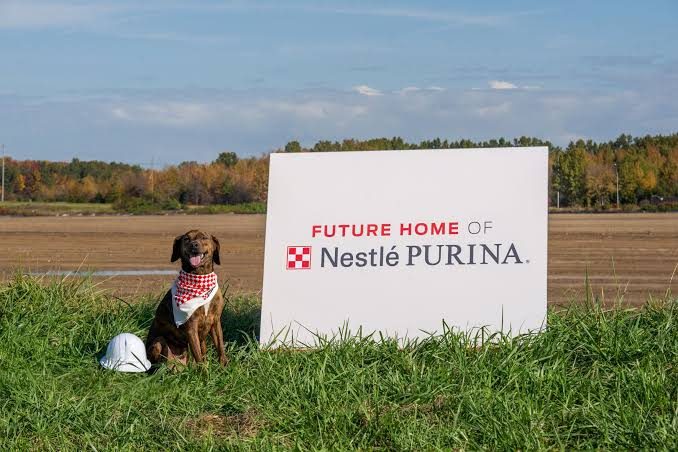
Nestlé Purina Announces $550M Ohio Plant Opening and THB 64B Thailand Expansion, Marking Largest Manufacturing Push in Purina History
Executive Summary: On August 31 and September 3, 2026, Nestlé Purina opened a USD 550 million (≈RMB 3.7 billion) smart factory in Batavia, Ohio and secured Thailand Board of Investment approval for two THB 64 billion (≈USD 1.94 billion) pet food and treat projects in Rayong. Together the two investments exceed USD 2.4 billion and represent both Purina’s first U.S. greenfield plant since 1975 and a 90% export-oriented capacity expansion in Southeast Asia. Both moves are anchored in Nestlé’s stated view that pet care is one of the group’s four core global growth categories.
Key Facts
- Company
- Nestlé Purina (Nestlé S.A.)
- Country
- Switzerland (Thailand + United States operations)
- Industry
- Pet food manufacturing, contract manufacturing
- Category
- Premium and mid-tier dry kibble, wet food, treats
- Event
- Two simultaneous capacity expansion announcements: Ohio plant opening and Thailand BOI approval
- Date
- 2026-08-31 (Ohio); 2026-09-03 (Thailand BOI approval)
- Location
- Batavia, Ohio, USA; Rayong Province, Thailand
- Source
- Thailand Board of Investment (BOI); Pet Industry Journal (宠业家)
What Happened
On August 31, 2026, Nestlé Purina officially opened a 1.3 million-square-foot (≈120,000 square meters) smart factory in Batavia, Ohio, representing a USD 550 million capital investment. The plant is the largest single-facility investment in a Purina production site in Nestlé’s history and the first greenfield Purina factory built in the United States since 1975. The facility produces Pro Plan, Purina ONE, and Dog Chow, with annual capacity sized to feed approximately 8 million pets. Current headcount stands at 430+ employees, with a planned ramp to more than 500 when fully operational. The Ohio factory is Purina’s 24th U.S. manufacturing facility.
Three days later, on September 3, 2026, the Thailand Board of Investment (BOI) formally approved two Nestlé Thailand investment projects in the Amata City Industrial Estate in Rayong Province, with a combined value exceeding THB 64 billion (≈USD 1.94 billion / RMB 13.6 billion). The first project, valued at approximately THB 45 billion (USD 1.36 billion), covers pet food production for the Felix, Pro Plan, and Friskies brands. The second, valued at THB 19.3 billion (USD 580 million), covers pet treat manufacturing for Purina One and Felix cat treats. More than 90% of the combined output is designated for export to the United States, Canada, Japan, Australia, and New Zealand, reinforcing Nestlé’s positioning of Thailand as a global core production base for its pet care division.
Local sourcing is deeply anchored. Approximately 56% of pet food raw materials (chicken, sardines, vegetables, oils, vitamins, minerals) and 88% of pet treat raw materials (chicken, sugar, tapioca starch) will be sourced from Thai suppliers, totaling more than THB 4.5 billion in annual local agricultural procurement. The two projects bring Nestlé Thailand’s cumulative 2026 new investment across coffee and pet food to more than THB 29 billion (≈USD 870 million).
Background
Nestlé Purina operates across more than 80 countries and is one of two global pet food brands alongside Mars Petcare. The company has consistently ranked as the world’s largest pet food manufacturer by revenue, with a portfolio spanning super-premium (Pro Plan, ONE), mainstream (Friskies, Felix, Dog Chow, Cat Chow), and veterinary-exclusive (Purina Pro Plan Veterinary Diets) tiers. Nestle Group’s 2024 annual report explicitly identifies pet care as one of four core growth categories alongside coffee, nutrition, and confectionery, and has publicly cited demographic headwinds in developed markets — falling birth rates, single-person households, and aging populations — as structural drivers of pet category demand.
The Ohio plant is a marked departure from Purina’s typical brownfield expansion strategy. Most U.S. capacity additions over the past two decades have come through acquisitions and modernization of existing facilities. The Batavia project is the first ground-up construction since 1975, when Purina was still an independent RJR Nabisco subsidiary. The plant incorporates robotic palletizing, automated warehousing, and digital production lines, reflecting a broader industry shift toward lights-out manufacturing in dry kibble.
Industry Context
The two announcements come amid accelerating global pet food capacity consolidation. In March 2026, Nestlé Purina brought a CHF 370 million wet food plant online in Vargeão, Brazil. In July 2026, Nestlé announced a separate CHF 520 million investment in a pet food factory and logistics platform in Mantova, Italy, scheduled for 2029 commissioning. Together with Ohio and Thailand, these projects reflect a multi-year USD 5+ billion capital commitment across the Nestlé pet care network.
Thailand has become one of the most competitive pet food manufacturing locations globally. Thai pet food exports reached USD 3.28 billion in 2025, up 8.15% year over year, capturing 10.2% of global export market share and making Thailand the world’s second-largest pet food exporter after Germany. The BOI’s investment promotion framework — tax incentives, simplified work permits, and export-oriented customs facilitation — has been central to attracting multinational manufacturers.
Market and Business Impact
For international pet brands and contract manufacturers, the 90% export ratio from the new Thailand capacity tells a clear competitive story: Nestlé intends to remain the world’s lowest-cost producer of mid-tier dry kibble and treats for at least the next decade. With more than USD 1.9 billion in Thai capacity coming online across Felix, Pro Plan, Friskies, and Purina One ranges, third-party contract manufacturers in Southeast Asia will face heightened pricing pressure on commodity dry food and treat categories.
For U.S. distributors and retailers, the Ohio plant signals continued internalization of premium and super-premium production that ultimately affects how much does a puppy cost across its lifetime feeding cycle. By bringing Pro Plan and Purina ONE production in-house rather than relying on co-packers, Nestlé gains tighter control over SKU cycling, formulation iterations, and supply reliability.
The Thai projects also bring secondary economic impact. Local agricultural procurement in excess of THB 4.5 billion annually creates direct demand pull for Thai chicken, fish, and crop producers and supports the development of a more vertically integrated Thai pet food ingredient supply chain.
Companies and Brands Involved
As a major pet products manufacturer, Nestlé Purina spans the full brand hierarchy from premium Pro Plan ranges to mainstream Felix and Friskies.
Nestlé S.A. (SIX: NESN) is the parent group. Nestlé Purina is the global pet care division. Brands covered by the two expansions include Pro Plan, Purina ONE, Dog Chow, Friskies, Felix, and Purina Pro Plan Veterinary Diets. Other named brands already operating at the Rayong complex include Purina One and Felix cat treats. Nestlé Purina’s 24 U.S. manufacturing facilities span dry food, wet food, and treat production. The Thailand facility is one of Nestlé’s main global pet food production hubs, with approximately 90% historical export orientation. Major export destinations for the expanded Thai output will be the United States, Canada, Japan, Australia, and New Zealand.
Data and Evidence
- USD 550 million (≈RMB 3.7 billion) Ohio plant investment, the largest single-facility investment in Purina history (Nestlé Purina)
- 1.3 million square feet (≈120,000 square meters) Ohio factory footprint with 430+ current employees scaling to 500+ (Nestlé Purina)
- THB 64 billion (≈USD 1.94 billion) combined Thailand BOI approval (Thailand BOI)
- THB 45 billion pet food + THB 19.3 billion pet treats Thailand investment split (Thailand BOI)
- More than 90% export orientation across both Thailand projects (Nestlé Thailand)
- Annual local Thai agricultural procurement exceeds THB 4.5 billion (Nestlé Thailand)
- Thailand pet food exports 2025 = USD 3.28 billion, +8.15% YoY, 10.2% global share (BOI / industry trade data)
- Ohio plant annual capacity sized for ≈8 million pets (Nestlé Purina)
- Ohio plant is Purina’s 24th U.S. manufacturing facility and first greenfield US plant since 1975 (Nestlé Purina)
What This Means for the Pet Industry
Within the global pet market, Nestlé Purina now commands an unmatched manufacturing footprint, with the Ohio plant and Thailand expansion bringing 24 U.S. and multiple Asian facilities under coordinated production planning.
Two simultaneous announcements within 72 hours — a U.S. greenfield plant and a Thailand capacity expansion — are the clearest signal yet that Nestlé Purina is treating pet care as the structural answer to declining birth rates in developed markets. The dual strategy — Thailand as the cost-arbitrage export hub and Ohio as the domestic premium production anchor — allows Nestlé to serve both low-cost and at-home premium geographies from a unified supply network. For B2B buyers, contract manufacturing capacity for premium and super-premium U.S. pet food may tighten as Nestlé internalizes more production, while contract dry kibble capacity in Southeast Asia will see increased competition from Nestlé’s expanded Rayong footprint. The takeaway for international pet brands: Nestlé intends to remain the global cost leader in mainstream dry and treat categories for the foreseeable future.
Key Takeaways
These investments are among the most significant pet industry trends 2026 has seen so far, defining the supply-side geometry of the global pet food sector for the next decade.
- Nestlé Purina opened a USD 550 million (≈RMB 3.7 billion) smart factory in Batavia, Ohio on August 31, 2026 — its first greenfield U.S. plant since 1975 and the largest single-facility investment in Purina history.
- The Thailand BOI approved two combined Nestlé Thailand projects worth THB 64 billion (≈USD 1.94 billion) in Rayong on September 3, 2026, with more than 90% of pet food and treat output designated for export.
- Thailand local agricultural procurement will exceed THB 4.5 billion annually across chicken, fish, vegetables, sugar, and tapioca starch inputs.
- The two projects form part of a broader USD 5+ billion Nestlé pet care capital commitment spanning Brazil (2026), Ohio (2026), Thailand (2026), and Italy (2029 commissioning).
- For U.S. distributors, the Ohio plant internalizes Pro Plan and Purina ONE production; for Southeast Asian contract manufacturers, the Thailand expansion intensifies competition in mainstream dry kibble and treats.
Frequently Asked Questions
How much did Nestlé Purina invest in its new Ohio factory?
Nestlé Purina invested USD 550 million (≈RMB 3.7 billion) in the new 1.3 million-square-foot smart factory in Batavia, Ohio. The plant is the largest single-facility investment in a Purina production site in Nestlé history and Purina’s first greenfield U.S. factory since 1975.
How much did Nestlé commit to its Thailand pet food and treat expansion?
The Thailand Board of Investment approved two combined Nestlé Thailand projects worth THB 64 billion (≈USD 1.94 billion / RMB 13.6 billion). Approximately THB 45 billion covers pet food (Felix, Pro Plan, Friskies) and THB 19.3 billion covers pet treats (Purina One, Felix cat treats). More than 90% of output is earmarked for export.
Which pet industry brands are produced at the new Ohio factory?
The Batavia, Ohio factory produces Pro Plan, Purina ONE, and Dog Chow across premium and mid-tier dry kibble categories. Annual capacity is sized to feed approximately 8 million pets. The plant employs 430+ staff and is planned to scale to 500+.
Why is Thailand a strategic location for global pet food manufacturing?
Thailand is the world’s second-largest pet food exporter after Germany, with USD 3.28 billion in 2025 exports (10.2% global share, +8.15% YoY). The country’s combination of BOI tax incentives, deep agricultural supply chain, port logistics, and skilled workforce has attracted Nestlé, Mars, and other multinationals to build export-oriented production hubs there.
How does this expansion affect how much a puppy costs over its lifetime?
The new Nestlé capacity primarily affects manufacturing and supply economics rather than retail pricing directly. However, by reinforcing commodity dry kibble supply, the expansion helps stabilize the lower-cost tier of puppy food that constitutes the largest share of feeding costs for most puppy owners.
Sources
- Primary — Thailand Board of Investment (BOI), investment promotion approval notice, September 3, 2026, https://www.boi.go.th/
- Primary — Pet Industry Journal (宠业家), “雀巢普瑞纳双线扩产:泰国64亿泰铢扩建、美国5.5亿美元新厂落成,” September 8, 2026, https://www.toutiao.com/article/7682911114178462244
- Secondary — Nestlé Purina corporate communications, Batavia Ohio plant opening announcement, August 31, 2026, https://www.nestlepurina.com/
- Secondary — C&EN, “Business Watch: Symrise finds buyer for terpene unit, and more,” September 2026, https://cen.acs.org/business/business-watch-symrise-finds-buyer/104/web/2026/09
- Secondary — PetPitch, industry coverage of Thai pet food export growth, 2026, https://petpitch.petzcareindia.com/
